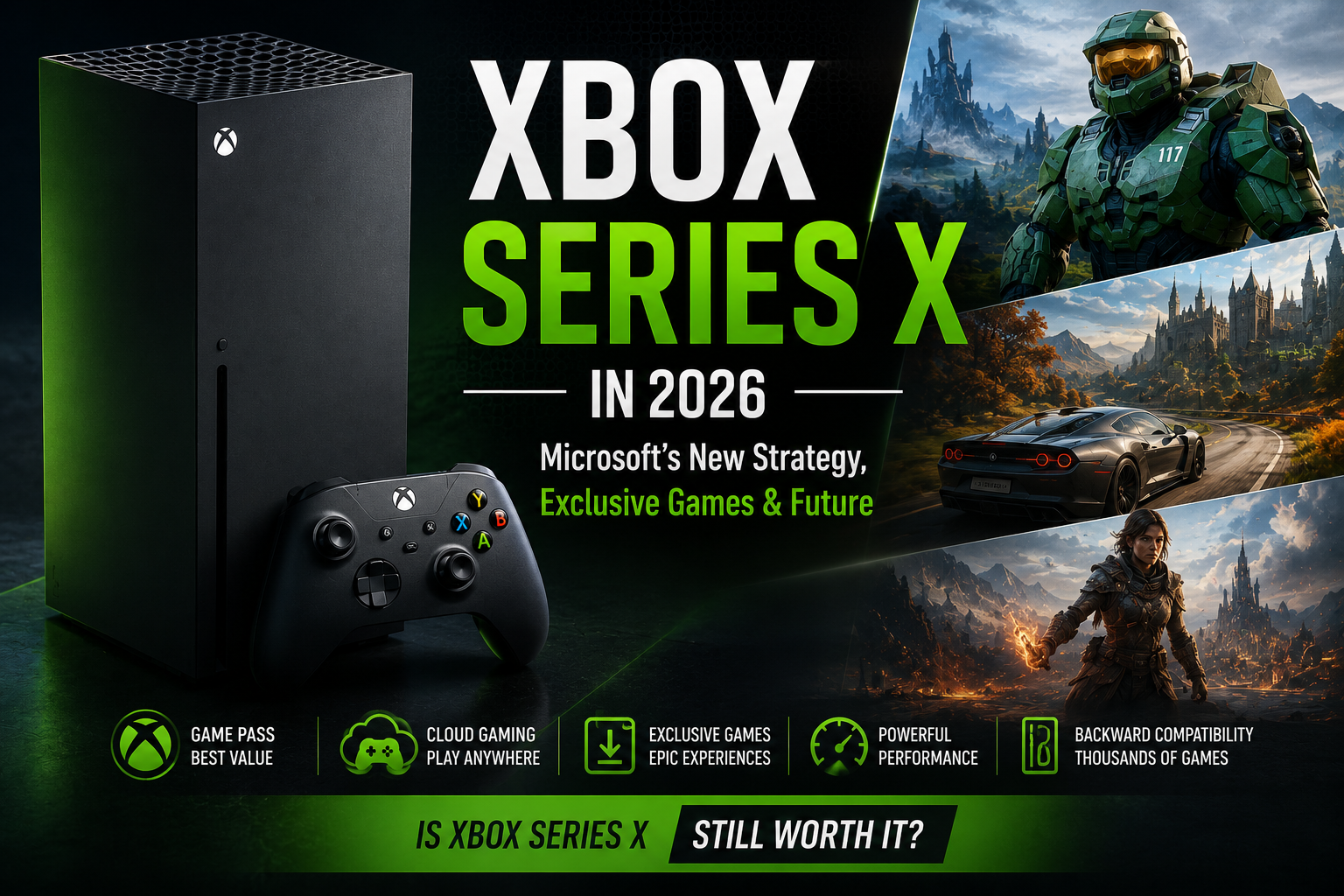

Xbox Series X in 2026: Is Microsoft’s Changing Exclusive Strategy Helping or Hurting the Console?
Introduction
The gaming industry has changed dramatically over the past few years, and Microsoft has been one of the biggest forces behind that transformation. Rather than relying solely on traditional console exclusives, the company has expanded its gaming ecosystem across Xbox consoles, Windows PCs, cloud gaming, and subscription services. This shift has sparked widespread discussion among players, developers, and industry analysts about what it truly means to own an Xbox in 2026.
For years, exclusive games were considered the biggest reason to choose one console over another. Whether it was a blockbuster action title, an immersive role-playing game, or a competitive multiplayer experience, exclusive releases often influenced purchasing decisions. Today, however, Microsoft’s strategy has become much broader. Instead of focusing exclusively on selling hardware, the company is investing in making Xbox games available wherever players want to play.
That approach has created both excitement and uncertainty. While Xbox Game Pass, Xbox Cloud Gaming, and Play Anywhere have expanded access to games, many fans continue to question whether the Xbox Series X still offers a unique reason to buy dedicated hardware. At the same time, Microsoft’s growing collection of first-party studios is developing ambitious projects that could shape the platform’s future for years to come.
This article explores how Microsoft’s evolving strategy affects the Xbox Series X, examines the changing role of console exclusives, and looks at what players should realistically expect from the platform in the coming years.
Table of Contents
- The Evolution of Xbox
- Understanding Microsoft’s New Gaming Philosophy
- Why Exclusives Matter Less Than Before
- The Xbox Series X Hardware Still Stands Out
- Microsoft’s Growing First-Party Portfolio
- Upcoming Games Creating Excitement
- How Xbox Game Pass Changed Everything
- What This Means for Players
- Conclusion (Part 3)
The Evolution of Xbox
Microsoft entered the console market with a simple objective: compete directly with established gaming brands by offering powerful hardware and memorable exclusive games. Over multiple generations, the Xbox brand built a loyal community through franchises such as Halo, Forza, Gears, and Fable.
The launch of the Xbox Series X represented another major milestone. Instead of simply increasing graphical performance, Microsoft focused on delivering a premium gaming experience built around speed, backward compatibility, and player convenience.
Some of the console’s biggest strengths include the following:
- Fast SSD storage with Quick Resume
- Native 4K gaming support
- High frame-rate gameplay
- Extensive backward compatibility
- Smart Delivery technology
- Dolby Vision and Dolby Atmos support
- Variable Refresh Rate (VRR)
- Ray tracing capabilities
Rather than forcing players to leave older game libraries behind, Microsoft invested heavily in preserving previous Xbox generations. This consumer-friendly approach immediately distinguished the Xbox Series X from many competing platforms.
Microsoft’s Gaming Vision Has Expanded Beyond Consoles
One of Microsoft’s most significant strategic decisions has been redefining what Xbox actually represents.
Instead of viewing Xbox as only a physical console, Microsoft increasingly treats it as a complete gaming ecosystem. Today, Xbox games can often be enjoyed across several devices, including the following:
- Xbox Series X
- Xbox Series S
- Windows gaming PCs
- Handheld gaming PCs
- Supported smart TVs
- Mobile devices through cloud streaming
This broader vision allows players to continue their progress across different devices using the same Xbox account. Features like cloud saves and cross-platform progression make switching between devices remarkably seamless.
Rather than asking players to buy a single piece of hardware, Microsoft wants users to stay connected to the Xbox ecosystem regardless of where they play.
Why Microsoft’s Strategy Is Different
Traditional console competition has usually followed a familiar formula.
The strategy looked something like this:
- Release powerful hardware.
- Launch exclusive games.
- Sell millions of consoles.
- Repeat every generation.
Microsoft has gradually shifted away from that model.
Today, success is measured not only by console sales but also by the following:
| Traditional Console Strategy | Microsoft’s Current Strategy |
|---|---|
| Hardware sales | Ecosystem growth |
| Physical console ownership | Active monthly users |
| Exclusive software | Multi-device accessibility |
| One-time purchases | Subscription revenue |
| Closed platform | Connected gaming services |
This doesn’t mean Microsoft has abandoned the Xbox Series X. Instead, the console has become one important part of a much larger platform.
Why Console Exclusives Still Matter
Even though Microsoft has broadened its ecosystem, exclusive games remain one of the industry’s biggest selling points.
Historically, exclusives have helped define gaming platforms by giving players unique experiences unavailable elsewhere. Strong exclusive titles often become the face of a console generation and contribute to long-term brand loyalty.
Exclusive games generally provide several advantages:
They Create Hardware Demand
Many players purchase consoles specifically to access certain games. A highly anticipated exclusive can significantly boost hardware sales.
They Strengthen Brand Identity
Exclusive franchises become closely associated with a platform. Players often connect iconic characters and game worlds directly with a particular console brand.
They Encourage Ecosystem Loyalty
Players who invest time in exclusive franchises are more likely to remain within the same ecosystem for future releases, subscriptions, and digital purchases.
They Showcase Technical Capabilities
Developers can optimise exclusive games for a single hardware platform, often resulting in better performance and more advanced visual features.
Changing Definitions of “Exclusive”
One reason discussions around Xbox exclusivity have become increasingly complex is that the definition of an exclusive has evolved.
Several categories now exist:
Console Exclusive
Available on one console family but also playable on PC.
Timed Exclusive
Initially launches on one platform before expanding to others after a set period.
Ecosystem Exclusive
Playable across Xbox consoles, Windows PCs, and cloud services while remaining within Microsoft’s gaming ecosystem.
Full Multi-Platform Release
Released simultaneously across multiple competing platforms.
These distinctions have changed how players interpret game announcements. A title described as “exclusive” may not necessarily be limited to Xbox hardware alone, leading to different expectations among fans.
Xbox Series X Hardware Continues to Impress
Despite ongoing conversations about software strategy, the Xbox Series X remains one of the most capable gaming consoles available.
Its hardware is designed to handle demanding modern games while maintaining smooth performance and fast loading times.
CPU Performance
The custom AMD Zen 2 processor enables complex simulations, advanced AI behaviour, and consistent frame rates in modern titles.
Graphics Performance
The RDNA 2 graphics architecture supports:
- Hardware ray tracing
- Dynamic lighting
- Improved reflections
- Enhanced shadows
- Advanced visual effects
These features help create more immersive gaming environments without sacrificing overall performance.
Storage Speed
The custom NVMe SSD dramatically reduces loading times and powers Quick Resume, allowing players to switch between multiple games almost instantly.
Backward Compatibility
One of the Xbox Series X’s greatest strengths is its ability to play thousands of games from previous Xbox generations. Many older titles also receive automatic enhancements, including improved frame rates, higher resolutions, and reduced loading times.
For players with extensive digital libraries, this compatibility adds significant long-term value.
Microsoft’s First-Party Studios Continue to Grow
Over the past several years, Microsoft has invested heavily in expanding its game development capabilities.
Its portfolio now includes a wide variety of studios working across different genres, ranging from action-adventure games and RPGs to racing simulators and strategy titles.
This broader lineup gives Microsoft the flexibility to deliver experiences that appeal to many types of players rather than relying on only a handful of flagship franchises.
Some key areas of focus include:
- Story-driven adventures
- Open-world RPGs
- First-person shooters
- Racing games
- Real-time strategy
- Cooperative multiplayer experiences
- Family-friendly titles
The goal is to maintain a steady release pipeline that keeps players engaged throughout the year.
The Next Wave of Xbox Games
Several upcoming projects have generated significant anticipation within the Xbox community. While each game targets a different audience, together they represent Microsoft’s ambition to diversify its lineup.
These titles are expected to showcase:
- Large-scale worlds
- Advanced visual technology
- Rich storytelling
- Deeper player choice
- Improved AI systems
- Expanded multiplayer features
- Next-generation performance
Rather than relying on a single blockbuster release, Microsoft appears focused on building a balanced portfolio capable of attracting players with different interests.
That strategy may ultimately strengthen the Xbox ecosystem by ensuring there is always something new for subscribers and console owners to explore.
Looking Ahead
The conversation surrounding Xbox Series X is no longer just about hardware specifications or exclusive releases. Instead, it reflects a broader transformation in how games are distributed, accessed, and experienced.
Microsoft’s long-term vision places equal emphasis on accessibility, flexibility, and player choice. Whether that approach will reshape the competitive landscape remains a topic of ongoing debate, but it is already influencing how developers, publishers, and consumers think about the future of gaming.
In the next section, we’ll take a closer look at Xbox Game Pass, Microsoft’s release strategy, the debate around exclusivity, upcoming first-party titles, and what these developments mean for Xbox Series X owners in the years ahead.
Xbox Game Pass, First-Party Releases, and the Future of Xbox Series X
Xbox Game Pass: The Service That Changed Console Gaming
When discussing the modern Xbox ecosystem, it is impossible to ignore the impact of Xbox Game Pass. Rather than asking players to purchase every new release individually, Microsoft has invested heavily in a subscription model that provides access to a growing library of games.
This approach has reshaped how many players discover and enjoy games. Instead of committing to a full-price purchase, subscribers can explore multiple genres, revisit classic titles, and try newly released games with less financial risk.
For Xbox Series X owners, Game Pass enhances the overall value of the console by making it easier to maintain a diverse gaming library without buying every title separately.
Key Benefits of Xbox Game Pass
- Hundreds of games across multiple genres
- New first-party releases available on launch day
- Cloud gaming support on compatible devices
- Frequent additions and updates
- Discounts on games leaving the library
- Access across Xbox consoles and Windows PCs (depending on subscription tier)
This model encourages experimentation. Players often discover games they might never have purchased outright, helping smaller developers gain visibility while keeping the platform fresh.
The Shift from Console Wars to Ecosystem Competition
The traditional “console war” centred on hardware sales and exclusive game libraries. Today, competition has become much broader.
Instead of asking which console is more powerful, many players now consider questions like the following:
- Which platform offers the best long-term value?
- Which subscription service provides the largest game library?
- Where can I continue my progress across multiple devices?
- Which ecosystem fits my gaming habits?
Microsoft’s strategy reflects this changing mindset. The company increasingly measures success through player engagement, subscriptions, and ecosystem growth rather than console sales alone.
For Xbox Series X owners, this means the console is part of a larger connected experience rather than the only way to access Xbox content.
Are Console Exclusives Becoming Less Important?
One of the most discussed topics in the gaming industry is whether exclusive games still hold the same influence they once did.
There are arguments on both sides.
Why Exclusives Still Matter
Exclusive games continue to create excitement and strengthen a platform’s identity. Major first-party releases can attract new players, generate media attention, and showcase the capabilities of modern hardware.
Benefits include:
- Stronger brand recognition
- Increased hardware sales
- Dedicated fan communities
- Technical optimization for specific platforms
Why the Industry Is Changing
At the same time, many publishers are looking beyond traditional exclusivity.
Developing modern AAA games requires significant investment, and reaching multiple platforms can help publishers expand their audience and recover development costs more effectively.
Microsoft’s ecosystem strategy reflects this broader industry trend by prioritising accessibility alongside hardware.
Understanding Microsoft’s Current Release Strategy
Microsoft now follows a more flexible approach to publishing games.
Some titles remain closely associated with the Xbox ecosystem, while others may eventually appear on additional platforms depending on business priorities.
This has led to growing discussions among players about what should truly be considered an “Xbox exclusive”.
Several terms are now commonly used:
| Type | Meaning |
|---|---|
| Console Exclusive | Available on Xbox consoles but also playable on PC |
| Ecosystem Exclusive | Playable across Xbox consoles, Windows PCs, and cloud gaming |
| Timed Exclusive | Launches first on one platform before expanding later |
| Multi-Platform Release | Available across several competing platforms |
These evolving definitions have changed how game announcements are interpreted and have encouraged publishers to communicate platform availability more clearly.
Upcoming Xbox Games Worth Watching
Microsoft’s expanding first-party lineup includes several highly anticipated projects across a variety of genres.
Although release schedules may change, these games represent the company’s continued investment in original experiences.
Role-Playing Adventures
Large-scale RPGs remain a major priority, offering expansive worlds, player-driven choices, and long-term replay value.
Players can expect:
- Deep character progression
- Branching storylines
- Open-world exploration
- Complex quests
- Rich environmental storytelling
Action-Adventure Experiences
Narrative-driven action games continue to play an important role in Microsoft’s portfolio.
Modern action-adventure titles increasingly combine cinematic storytelling with exploration, puzzle-solving, and dynamic combat systems.
Racing Games
The Xbox brand has long been associated with high-quality racing experiences.
Advances in graphics technology, physics simulation, and online competition continue to push the genre forward.
Future racing titles are expected to offer:
- Larger maps
- Dynamic weather systems
- Improved vehicle customization
- Enhanced online multiplayer
- More realistic driving physics
Strategy Games
Microsoft remains one of the few major publishers consistently investing in real-time strategy games.
These titles appeal to players who enjoy:
- Tactical decision-making
- Resource management
- Base building
- Competitive multiplayer
- Historical and fantasy settings
Why Hardware Still Matters
Some players argue that if games are available across multiple devices, dedicated consoles become less important.
However, the Xbox Series X continues to provide several advantages that many gamers appreciate.
Consistent Performance
Unlike gaming PCs, which vary widely in hardware configurations, every Xbox Series X offers the same core experience.
Developers can optimise games specifically for the console, helping ensure stable performance.
Simplicity
One of the biggest strengths of console gaming is convenience.
Players can simply:
- Install a game
- Download updates
- Pick up a controller
- Start playing
There is no need to compare graphics cards, adjust driver settings, or worry about meeting system requirements.
Living Room Experience
Many players still prefer gaming on a large television from the comfort of their couch.
The Xbox Series X is designed to integrate seamlessly into home entertainment systems while supporting features such as HDR, Dolby Vision, and surround sound technologies.
The Importance of Backward Compatibility
Backward compatibility has become one of Microsoft’s strongest competitive advantages.
Rather than leaving older titles behind with each new console generation, Microsoft has invested in preserving gaming history.
Benefits include:
- Larger game libraries
- Continued access to digital purchases
- Enhanced versions of classic games
- Reduced need to keep older hardware connected
- Better value for long-time Xbox players
This commitment helps players transition between console generations without abandoning years of accumulated purchases.
Xbox Play Anywhere Expands Player Freedom
Xbox Play Anywhere reflects Microsoft’s broader ecosystem strategy.
Eligible games can often be purchased once and played across supported Xbox consoles and Windows PCs while sharing:
- Save files
- Achievements
- Progress
- Download rights
This flexibility appeals to players who regularly switch between desktop gaming and console gaming.
Cloud Gaming Continues to Improve
Cloud gaming has grown significantly over the past several years.
Instead of relying entirely on local hardware, games can be streamed over an internet connection to compatible devices.
Potential advantages include the following:
- No lengthy downloads
- Instant access to supported games
- Reduced storage concerns
- Cross-device convenience
- Greater accessibility for casual players
Although internet quality still plays a major role in the overall experience, cloud technology continues to evolve and may become an increasingly important part of Microsoft’s long-term vision.
Challenges Facing Xbox
Despite its strengths, the Xbox platform also faces several important challenges.
Maintaining a Consistent Release Schedule
Players expect a steady flow of high-quality first-party games.
Long development cycles can create gaps between major releases, making consistent content delivery increasingly important.
Balancing Accessibility with Exclusivity
Microsoft must carefully balance two goals:
- Expanding its audience across multiple platforms.
- Preserving enough unique value to encourage console purchases.
Finding the right balance remains one of the company’s most significant strategic decisions.
Meeting Community Expectations
Gaming communities closely follow every announcement, trailer, and release date.
Expectations continue to grow as Microsoft’s first-party studio network expands.
Delivering polished experiences while managing ambitious development timelines will remain essential.
What Makes Xbox Series X a Strong Choice in 2026?
Even as Microsoft’s ecosystem expands, the Xbox Series X continues to appeal to players who value performance, convenience, and long-term support.
Reasons many gamers continue to choose the platform include:
- Powerful hardware
- Excellent backward compatibility
- Quick Resume functionality
- Xbox Game Pass value
- Strong first-party development pipeline
- Smart Delivery support
- Cross-platform progression
- Reliable online infrastructure
- Growing ecosystem of services
These strengths help position the console as more than just a gaming device—it serves as a gateway to Microsoft’s broader gaming ecosystem.
Looking Ahead
As Microsoft’s gaming strategy continues to evolve, the conversation is no longer limited to whether a game is exclusive to one console. Instead, players are increasingly evaluating the overall value of an ecosystem that spans hardware, software, subscriptions, and cloud services.
Expert Perspectives, FAQs, and Final Verdict on Xbox Series X
How Industry Expectations Around Xbox Have Changed
Not long ago, the success of a gaming platform was measured primarily by the number of consoles it sold. Today, the conversation is much broader. Companies are increasingly evaluated based on how many players they reach, how engaged those players remain, and how effectively they build long-term ecosystems.
Microsoft has embraced this shift more aggressively than most of its competitors.
Instead of treating the Xbox Series X as the centre of its business, Microsoft has positioned it as one important part of a larger gaming network that includes Windows PCs, cloud gaming, subscription services, and connected experiences. This strategy reflects the company’s belief that accessibility and flexibility will play an increasingly important role in the future of gaming.
Whether this approach ultimately becomes the industry standard remains to be seen, but it has already influenced how publishers and players think about gaming platforms.
What Does This Mean for Xbox Series X Owners?
For existing Xbox Series X owners, Microsoft’s strategy brings several practical benefits.
A Larger Gaming Ecosystem
Players are no longer tied to a single device. Games, achievements, and saved progress can often move seamlessly across supported platforms, making it easier to continue playing wherever it is most convenient.
Better Long-Term Value
Features like backward compatibility, Smart Delivery, and Xbox Game Pass help extend the usefulness of the console over time. Rather than replacing an existing game library, each new addition builds on previous purchases and subscriptions.
Continued Hardware Optimization
Even though Microsoft’s ecosystem now extends beyond consoles, developers continue optimising games for Xbox Series X hardware. This ensures that the console remains a premium option for players who prefer a dedicated gaming device.
Comparing Different Gaming Approaches
Every gaming platform offers a different experience depending on what players value most.
| Feature | Xbox Series X | Gaming PC | Cloud Gaming |
|---|---|---|---|
| Hardware Simplicity | Excellent | Moderate | Excellent |
| Upgrade Flexibility | Limited | Excellent | Not Required |
| Initial Cost | Moderate | Higher | Lower |
| Performance Consistency | Excellent | Varies | It depends on the Internet. |
| Portability | Limited | Moderate | Excellent |
| Physical Media Support | Yes | Rare | No |
| Backward Compatibility | Excellent | Game Dependent | Service-dependent |
Each option has its own strengths, and the best choice depends on individual gaming preferences, budget, and lifestyle.
The Role of Xbox Series X in Microsoft’s Long-Term Vision
The Xbox Series X is likely to remain an important part of Microsoft’s gaming strategy for years to come, but its role continues to evolve.
Rather than serving as the only gateway to Xbox games, it now represents the premium hardware experience within a much larger ecosystem.
That means future success will likely depend on several factors working together:
- High-quality first-party games
- Reliable online services
- Strong subscription offerings
- Cloud gaming improvements
- Cross-device integration
- Continued hardware innovation
This broader approach allows Microsoft to support a wider range of players without abandoning those who prefer traditional console gaming.
Strengths of the Xbox Series X
The Xbox Series X continues to offer a compelling package for many gamers.
Performance
Powerful hardware enables smooth gameplay, fast loading times, and support for modern visual technologies.
Backward Compatibility
Access to thousands of games from previous Xbox generations remains one of the platform’s standout features.
Game Pass Integration
The subscription model gives players access to a diverse and frequently updated library of games.
Player-Friendly Features
Conveniences such as Quick Resume, Smart Delivery, cloud saves, and cross-platform progression contribute to a streamlined gaming experience.
Ecosystem Connectivity
Whether playing on a console, PC, or compatible cloud device, Microsoft aims to keep players connected through a shared Xbox account.
Areas Microsoft Still Needs to Improve
While the Xbox ecosystem has many strengths, there are also opportunities for improvement.
Consistent First-Party Releases
Players want a regular cadence of polished, high-quality games that demonstrate the capabilities of Xbox hardware.
Clearer Communication
As Microsoft’s publishing strategy evolves, players benefit from clearer messaging about where and when games will be available. Consistent terminology around platform availability can help reduce confusion.
Expanding Global Reach
Continuing to improve cloud infrastructure, regional availability, and localisation can make Xbox services more accessible to players around the world.
Should You Buy an Xbox Series X in 2026?
The answer depends on what you value most in a gaming platform.
The Xbox Series X is an excellent choice if you:
- Want powerful console hardware.
- Appreciate backward compatibility.
- Prefer subscription-based access to games.
- Enjoy Microsoft’s first-party franchises.
- Like switching between console and PC gaming.
- Value convenience and fast loading times.
However, players who focus primarily on experiences available only on one console brand may weigh their options differently, especially if certain titles launch across multiple platforms over time.
Ultimately, the Xbox Series X delivers its greatest value when viewed as part of Microsoft’s broader ecosystem rather than as a standalone console.
Buying Tips for New Players
Before purchasing an Xbox Series X, consider the following:
Evaluate Your Gaming Habits
Think about how often you play, what genres you enjoy, and whether you already own a gaming PC.
Compare Subscription Options
If you plan to play a variety of games throughout the year, a subscription service may offer greater value than purchasing individual titles.
Check Display Compatibility
To take full advantage of the console’s performance, ensure your TV or monitor supports features such as 4K resolution, HDR, and high refresh rates where applicable.
Plan Your Storage Needs
Modern games can require significant storage space, so it’s worth considering how many titles you expect to install at the same time.
Frequently Asked Questions
Is the Xbox Series X still worth buying in 2026?
Yes. It remains a powerful console with excellent performance, strong backward compatibility, and access to a large gaming ecosystem.
Does Xbox still make exclusive games?
Microsoft continues to develop first-party games for the Xbox ecosystem, although some releases may also appear on Windows PCs or other platforms depending on the company’s publishing strategy.
What makes Xbox Game Pass valuable?
Game Pass provides access to a broad library of games, including many first-party releases, allowing players to explore a wide variety of experiences through a subscription model.
Can I play older Xbox games on Xbox Series X?
Many titles from previous Xbox generations are supported through backward compatibility, and some receive enhancements such as improved frame rates or higher resolutions.
Is Xbox Series X more powerful than previous Xbox consoles?
Yes. It offers significant improvements in processing power, graphics capabilities, storage speed, and overall performance compared with earlier Xbox generations.
Can I use my Xbox account on multiple devices?
Yes. Your Xbox account can be used across supported Xbox consoles, Windows PCs, and compatible cloud gaming services, with many games supporting shared saves and achievements.
Does Xbox Series X support physical game discs?
Yes. The console includes an Ultra HD Blu-ray disc drive, allowing players to use compatible physical game discs and media.
Is Xbox Cloud Gaming replacing consoles?
No. Cloud gaming complements traditional gaming rather than replacing it. Many players continue to prefer dedicated hardware for its consistent performance and local processing power.
What is Smart Delivery?
Smart Delivery ensures that players receive the best available version of a supported game for their Xbox console without needing to purchase separate editions.
Who should consider buying Xbox Series X?
The console is well suited for players seeking premium hardware, fast performance, extensive backward compatibility, and access to Microsoft’s growing ecosystem of games and services.
Key Takeaways
- Xbox is evolving from a console brand into a comprehensive gaming ecosystem.
- Xbox Series X remains one of the most powerful home gaming consoles available.
- Backward compatibility continues to be one of Microsoft’s strongest competitive advantages.
- Xbox Game Pass has fundamentally changed how many players access and discover games.
- Microsoft’s strategy emphasises accessibility, flexibility, and player choice across multiple devices.
- Clear communication about platform availability will become increasingly important as publishing strategies evolve.
- The long-term success of Xbox will depend on delivering compelling games while maintaining a connected ecosystem.
Final Thoughts
The Xbox Series X represents more than a hardware upgrade—it reflects Microsoft’s broader vision for the future of gaming. Instead of focusing solely on selling consoles, the company is building an ecosystem where players can access games across multiple devices while maintaining a consistent experience through shared accounts, cloud services, and subscription offerings.
This approach challenges the traditional definition of console exclusivity and encourages players to think beyond individual hardware purchases. While debates about exclusive games and platform strategy are likely to continue, the Xbox Series X remains a strong choice for gamers who value performance, convenience, and long-term support.
As the gaming industry continues to evolve, one thing is clear: Microsoft’s strategy is centred on giving players more ways to play, more flexibility in how they access games, and a connected ecosystem designed to adapt to changing gaming habits. For many players, that combination makes the Xbox Series X a compelling platform both today and in the years ahead