

Xbox Game Server Shutdowns in 2026: What Every Xbox Game Player Needs to Know
Xbox game server shutdowns The gaming world is changing faster than ever. Every year brings exciting new releases, technological improvements, and innovative online experiences. But while players eagerly anticipate what’s next, another reality often receives far less attention: older online games eventually reach the end of their lifecycle.
For many gamers, a favourite title isn’t just software—it’s a place where friendships were built, competitive skills improved, and unforgettable memories were created. When publishers announce that a game’s online servers are shutting down, it marks the end of an era for thousands of players.
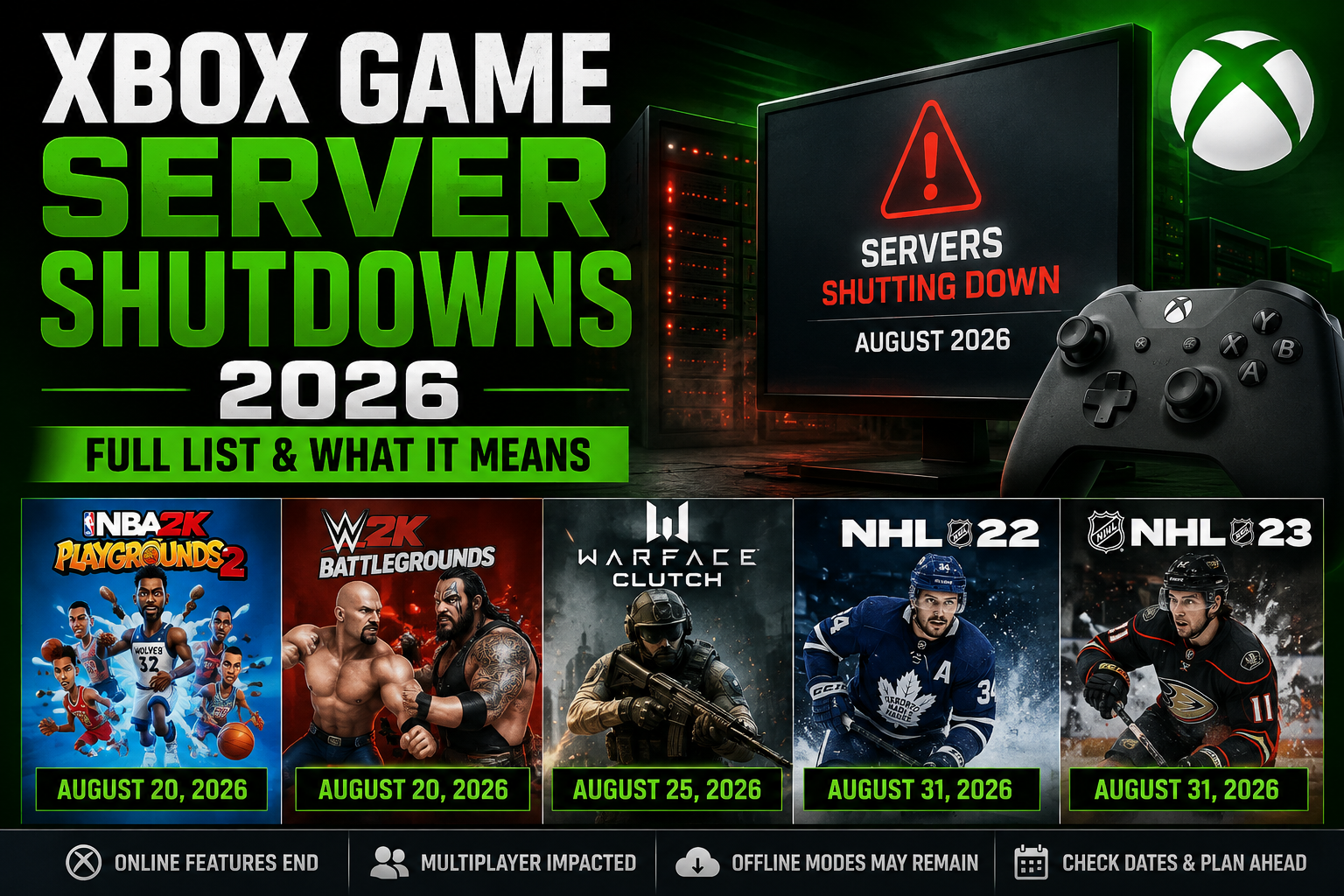
That’s exactly what’s happening during Xbox game server shutdowns in August 2026, when multiple Xbox games are scheduled to lose online functionality. According to recent announcements, five Xbox titles—including sports games and multiplayer shooters—will have their online services discontinued during the month.
If you’ve recently heard about an Xbox game shutting down and are wondering what it means for your purchases, achievements, or multiplayer experience, this guide explains everything in simple terms.
Rather than focusing only on the shutdown announcements, we’ll also explore why online games eventually disappear, what players can still access after servers close, and how these decisions reflect larger trends across the gaming industry.
Why Are Xbox Game Servers Shutting Down?
Unlike traditional offline games from previous console generations, many modern Xbox games rely on online infrastructure.
These servers are responsible for features such as the following:
- Multiplayer matchmaking
- Online progression
- Ranked competitions
- Cloud-based player statistics
- Seasonal events
- Digital economies
- Community leaderboards
- Anti-cheat systems
Maintaining these services requires dedicated hardware, software updates, engineering teams, security monitoring, and ongoing operational costs.
As player populations shrink over time, publishers often reach a point where continuing to support older titles no longer makes financial or technical sense. Rather than investing resources into ageing games with declining activity, companies usually shift their attention toward newer projects.
This isn’t unique to Xbox. Similar shutdowns happen regularly across PlayStation, Nintendo, and PC platforms as publishers retire older online services.
Why This News Matters
Many players assume purchasing a game means they’ll always be able to enjoy every feature.
Unfortunately, that’s not always true.
Today’s games increasingly depend on online authentication, multiplayer infrastructure, cloud services, and live updates.
When those systems disappear, certain parts of a game may no longer function—even if you legally own the title.
This has fuelled ongoing discussions about the following:
- Digital ownership
- Game preservation
- Consumer rights
- Always-online requirements
- Long-term access to purchased games
The issue has become even more relevant following recent industry debates surrounding digital licensing and online service availability.
Xbox Games Losing Online Servers in August 2026
The following Xbox titles are currently scheduled to lose online functionality during August 2026.
| Xbox Game | Server Shutdown Date | Main Impact |
|---|---|---|
| NBA 2K Playgrounds 2 | August 20, 2026 | Online multiplayer unavailable |
| WWE 2K Battlegrounds | August 20, 2026 | Online features removed |
| Warface: Clutch | August 25, 2026 | Multiplayer service ends. |
| NHL 22 | August 31, 2026 | Online modes discontinued |
| NHL 23 | August 31, 2026 | Online services discontinued |
It’s important to understand that server shutdown doesn’t always mean the entire game becomes unplayable.
The impact varies depending on how heavily each title relies on online infrastructure.
Game Spotlight: NBA 2K Playgrounds 2
A Different Take on Basketball
Unlike the traditional NBA 2K simulation series, NBA 2K Playgrounds 2 embraced fast-paced arcade basketball.
Players enjoyed:
- 2-on-2 matches
- Over-the-top dunks
- Power-ups
- Cartoon-inspired visuals
- Online competitions
Its pick-up-and-play style appealed to both casual players and long-time basketball fans.
What Changes After Shutdown?
Once servers close:
- Online matchmaking ends
- Competitive multiplayer disappears
- Leaderboards become unavailable
- Community events stop
However, local gameplay and offline content generally remain available where supported.
Why It Matters
Arcade sports games depend heavily on active communities.
When player counts decline significantly, maintaining dedicated servers becomes increasingly difficult to justify.
Game Spotlight: WWE 2K Battlegrounds
Wrestling with an Arcade Twist
Instead of realistic simulation, WWE 2K Battlegrounds delivered exaggerated action featuring the following:
- Cartoon visuals
- Overpowered attacks
- Fantasy arenas
- Fast matches
- Casual multiplayer
It served as an alternative to the simulation-focused WWE 2K franchise.
What Players Will Lose
Following server closure:
- Online matchmaking disappears
- Internet-based events end
- Community competition stops
Offline exhibition content should remain available depending on installed game data and platform support.
Game Spotlight: Warface: Clutch
One of Xbox’s Long-Running Free-to-Play Shooters
Among the announced shutdowns, Warface: Clutch may experience the biggest impact.
Unlike sports games that offer offline modes, Warface was fundamentally designed around online multiplayer.
Players joined:
- Team deathmatches
- Cooperative missions
- Competitive PvP
- Seasonal updates
- Live-service progression
The game’s identity revolved around constant online interaction.
Why This Shutdown Is Different
Because Warface depends almost entirely on online servers, closing them effectively ends the console version’s primary gameplay experience. Earlier announcements also indicated the title’s broader service wind-down across platforms.
For long-time fans, this represents more than losing multiplayer—it means saying goodbye to years of progression, communities, and shared experiences.
Game Spotlight: NHL 22
Sports franchises receive annual releases, but older entries often maintain loyal communities for years after launch.
NHL 22 continued attracting dedicated hockey fans through the following:
- Online leagues
- Ranked competition
- Team building
- Community tournaments
After August 31:
- Online matches stop
- Competitive play ends
- Connected features disappear
Offline modes remain the primary way to continue enjoying the game.
Game Spotlight: NHL 23
As one of the more recent hockey titles affected, NHL 23 demonstrates how quickly modern sports games transition to newer annual releases.
Most sports publishers concentrate resources on the latest instalment.
Eventually.
- Matchmaking populations shrink.
- Seasonal content concludes.
- Online maintenance becomes harder to justify.
- Support shifts to newer games.
For players still actively competing online, the shutdown marks the conclusion of that chapter.
Why Publishers Retire Older Xbox Games
Many gamers wonder:
“If the game already exists, why not just leave the servers running?”
The answer is more complicated than it appears.
Maintaining online services involves ongoing expenses, including:
Infrastructure Costs
Servers operate around the clock.
They require:
- Data centers
- Internet bandwidth
- Security systems
- Backups
- Redundancy
These costs continue regardless of player numbers.
Cybersecurity
Older infrastructure becomes increasingly vulnerable.
Developers must constantly defend against:
- Cheating
- Hacking
- Exploits
- DDoS attacks
Every active online game needs continued protection.
Technical Maintenance
Even mature games require:
- Bug fixes
- Compatibility testing
- Platform updates
- Certification
- Backend monitoring
As consoles evolve, keeping legacy services stable becomes more challenging.
Business Priorities
Studios also need to allocate engineers and support staff to new releases.
Supporting a game with only a small remaining audience can limit investment in future projects.
Server Shutdown vs. Delisting vs. End of Support
These terms are often confused, but they mean different things.
| Term | Meaning |
|---|---|
| Server Shutdown | Online functionality ends |
| Delisting | The game can no longer be purchased digitally |
| End of Support | No new updates or patches are released |
A game may be delisted years before its servers close—or vice versa. Likewise, a title can stop receiving updates while still offering online multiplayer for some time.
Understanding these distinctions helps players know what to expect from an older Xbox game as it reaches the end of its supported lifecycle.
What Happens After an Xbox Game’s Servers Shut Down?
One of the biggest misconceptions is that the entire game suddenly becomes unusable.
In reality, every title is different.
The impact depends on how much of the game relies on online connectivity.
Generally speaking, games fall into three categories.
1. Games That Continue Working Offline
Many traditional games still include offline features such as the following:
- Story campaigns
- Local multiplayer
- Split-screen modes
- Practice arenas
- Single-player tournaments
- Training modes
If these features don’t require server authentication, they usually remain playable even after online services end.
Examples often include older sports titles, racing games, and action adventures.
2. Games That Lose Only Online Features
Some Xbox games remain mostly functional but lose community-based content.
Players may lose access to:
- Ranked matchmaking
- Public multiplayer
- Leaderboards
- Online events
- Seasonal rewards
- Community challenges
Offline content generally continues to work, allowing owners to enjoy much of the original experience.
3. Online-Only Games
This category experiences the biggest impact.
If a title was designed around permanent internet connectivity, shutting down servers may effectively end the game.
Examples include:
- Competitive shooters
- MMO-style experiences
- Live-service games
- Some free-to-play titles
Without central servers handling matchmaking and game sessions, the software often has no practical way to function.
This is why online-only games generate the most emotional reactions when shutdown announcements are made.
What Happens to Xbox Achievements?
Achievements are an important part of the Xbox ecosystem.
Many players spend hundreds—or even thousands—of hours completing every challenge to reach 100% completion.
Server closures can affect achievement hunters in several ways.
Offline Achievements
Achievements tied to:
- Story progression
- Difficulty levels
- Collectibles
- Exploration
- Local gameplay
can usually still be earned after servers close, provided those modes remain accessible.
Online Achievements
Achievements requiring:
- Multiplayer victories
- Ranked matches
- Online tournaments
- Community events
- Seasonal objectives
often become permanently unobtainable once servers are offline.
This is one reason dedicated completionists try to finish online achievements before announced shutdown dates.
Existing Achievements Stay on Your Account
If you’ve already unlocked achievements before the shutdown:
- They remain on your Xbox profile.
- Your Gamerscore is unaffected.
- Your achievement history stays intact.
The shutdown only affects future unlock opportunities—not achievements you’ve already earned.
Will Downloaded DLC Still Work?
This depends on how the downloadable content was designed.
Usually Still Available
Many DLC packs continue working if they include the following:
- New characters
- Offline maps
- Cosmetic items
- Story expansions
- Local gameplay additions
May Stop Functioning
Content tied directly to online systems may no longer be usable.
Examples include:
- Seasonal battle passes
- Online event rewards
- Live-service progression
- Multiplayer-exclusive cosmetics
- Limited-time competitive modes
The exact outcome varies from game to game, so it’s always worth checking the publisher’s official shutdown notice.
Why Sports Games Lose Online Support So Quickly
Sports franchises are among the most common games to experience server shutdowns.
Why?
Because they follow annual release cycles.
Every year introduces:
- Updated player rosters
- New teams
- Gameplay improvements
- Visual upgrades
- Rule adjustments
- Current season branding
As newer editions arrive, player populations naturally migrate to the latest release.
Eventually.
- Matchmaking becomes slower.
- Competitive communities shrink.
- Operating older servers becomes less practical.
That’s why older sports titles often receive online support for only a limited number of years before retirement.
The Rise of Live-Service Games
Modern gaming has increasingly embraced the live-service model.
Instead of shipping a finished product and moving on, developers continue expanding games through:
- New seasons
- Battle passes
- Limited-time events
- Cosmetic updates
- Story expansions
- Competitive rankings
This creates an evolving experience that can last for years.
However, it also means the game’s future depends on ongoing publisher support.
When support ends, many of these experiences cannot continue in their original form.
Why Publishers Make These Decisions
Although shutdown announcements often disappoint fans, publishers typically evaluate several factors before retiring a game’s online services.
Declining Player Numbers
A server supporting only a small number of active players may no longer justify ongoing operating costs.
Modern multiplayer systems are expensive to maintain, regardless of daily traffic.
Technical Challenges
Older games were built using technology that may no longer align with modern operating systems, security standards, or platform requirements.
Supporting aging infrastructure can become increasingly difficult over time.
Resource Allocation
Every engineer maintaining an older title is an engineer who isn’t building future games.
Studios constantly balance the following:
- Supporting legacy titles
- Developing new releases
- Improving existing live-service games
Eventually, priorities shift.
Licensing Agreements
Some games contain licensed content, including:
- Professional athletes
- Music
- Brands
- Real-world leagues
- Vehicles
When licensing agreements expire, publishers sometimes choose not to renew them, especially for older games with smaller audiences.
Xbox vs. PlayStation: Similar Challenges
Xbox isn’t alone in facing server shutdowns.
Across the gaming industry, publishers routinely retire older titles on multiple platforms.
At the same time that several Xbox games are scheduled to lose online functionality, PlayStation Plus subscribers are also seeing various games rotate out of the subscription catalog as part of the service’s regular content refresh. This highlights how digital game availability continues to evolve across platforms.
While server shutdowns and subscription removals are different events, both reflect the changing nature of modern digital gaming.
Players increasingly access games through the following:
- Subscription libraries
- Cloud gaming
- Digital storefronts
- Online ecosystems
As these services evolve, game availability changes over time.
What Should Players Do Before a Shutdown?
If one of your favorite Xbox games is approaching its server retirement date, there are several steps worth considering.
Finish Online Achievements
Prioritize any achievements requiring
- Multiplayer victories
- Online ranking
- Community participation
- Seasonal objectives
These may become impossible afterward.
Complete Multiplayer Challenges
Some games feature:
- Online-exclusive missions
- Limited rewards
- Event-based cosmetics
It’s wise to complete these before services end.
Download Remaining Updates
Installing the latest available update ensures you have the most complete offline version of the game after support concludes.
Save Screenshots and Clips
Many players enjoy preserving memories from favourite online games.
Consider saving:
- Gameplay captures
- Tournament victories
- Funny multiplayer moments
- Memorable achievements
These become digital keepsakes after servers disappear.
Organize Local Multiplayer Sessions
If the game supports local play, invite friends for one final session before online matchmaking ends.
For many players, these farewell matches become lasting memories.
Understanding Digital Ownership
One of the biggest conversations surrounding server shutdowns involves digital ownership.
When purchasing a physical game decades ago, players generally expected it to remain playable indefinitely.
Today’s gaming landscape is different.
Many modern games depend on the following:
- Internet authentication
- Cloud infrastructure
- Online progression
- Continuous updates
As a result, owning a copy doesn’t always guarantee permanent access to every feature.
This has sparked broader discussions about how the industry can better preserve games for future generations while balancing technical and commercial realities.
Game Preservation Matters More Than Ever
Video games are increasingly recognised as an important part of cultural history.
They capture:
- Technology
- Art
- Music
- Storytelling
- Competitive communities
- Shared online experiences
When servers shut down, it’s not only gameplay that disappears.
Entire communities, player-created memories, and unique online moments can become inaccessible.
This is why museums, preservation groups, historians, and gaming enthusiasts continue advocating for ways to archive and preserve older games whenever possible.
Are Server Shutdowns Becoming More Common?
The perception that shutdowns are increasing isn’t entirely inaccurate.
Several long-term trends contribute to this:
- More games rely on online services than ever before.
- Live-service business models have expanded rapidly.
- Annual sports franchises release frequent new editions.
- Multiplayer communities naturally move toward newer games.
- Publishers increasingly focus on long-term flagship titles instead of maintaining many smaller online services.
As gaming continues evolving, players can likely expect server retirements to remain a normal part of the industry’s lifecycle.