
Motorrad Navigation Guide: Everything Riders Need to Know About Waze’s Motorcycle Mode
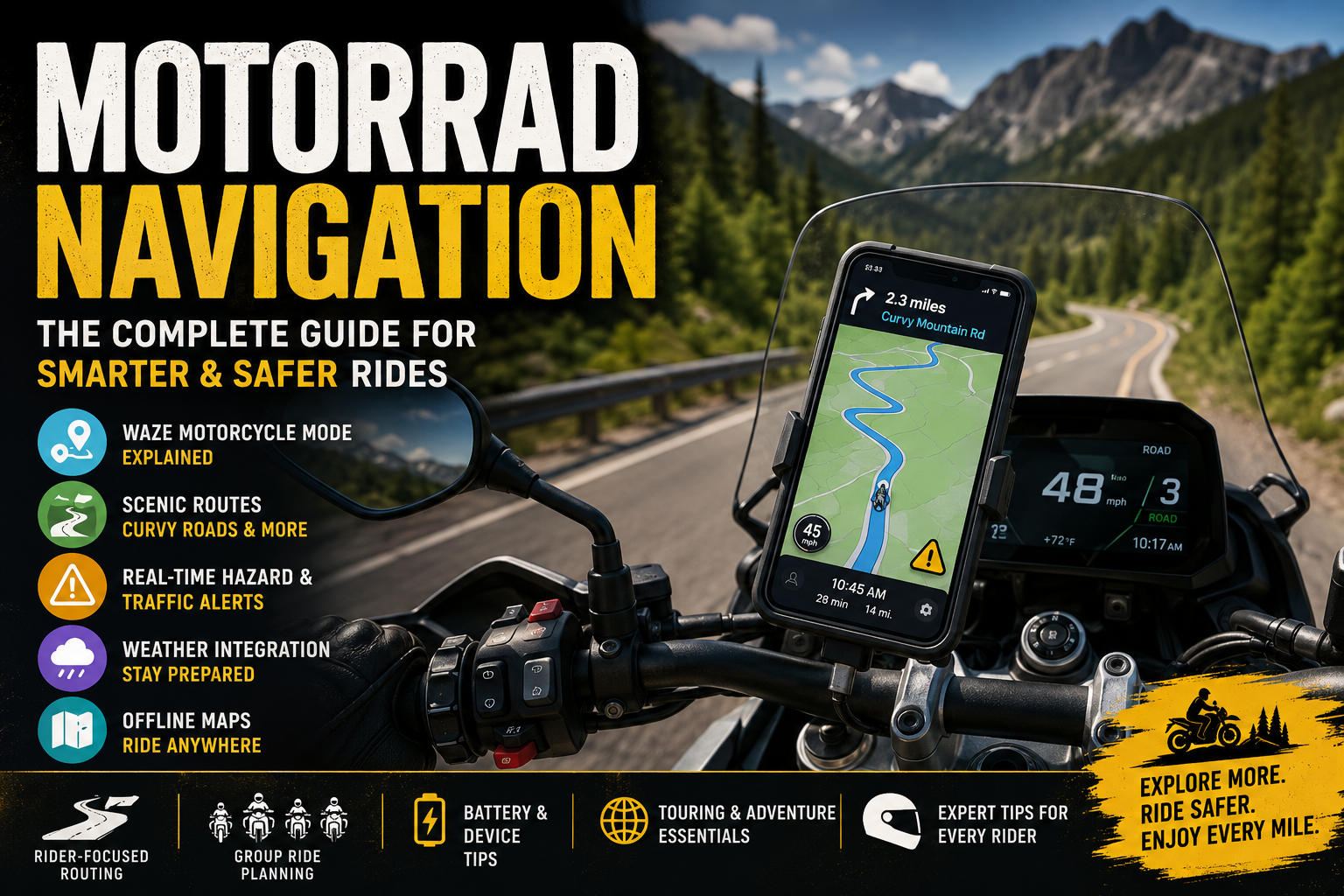
Motorrad navigation: Motorcycle riding is more than a way to travel—it’s an experience. Whether you’re commuting through city streets, exploring scenic mountain highways, or embarking on a cross-country adventure, having the right navigation system can make every ride smoother and safer.
For years, many motorcycle riders relied on standard GPS apps that were primarily designed for cars. While these apps could provide directions, they often failed to consider the unique needs of motorcyclists. Recent advancements in navigation technology are changing that by introducing motorcycle-focused routing, improved hazard alerts, and features that better match the riding experience.
In this comprehensive guide, you’ll learn everything about motorrad navigation, how motorcycle navigation differs from traditional GPS, what modern navigation apps now offer riders, and how to choose the best setup for your next adventure.
Why Motorrad Navigation Matters
Unlike driving a car, riding a motorcycle requires constant awareness of road conditions, weather, traffic, and hazards. Small obstacles that barely affect a car can become serious safety concerns for riders.
Examples include:
- Loose gravel
- Potholes
- Wet pavement
- Sharp corners
- Construction zones
- Fallen branches
- Oil spills
- Unexpected traffic slowdowns
A motorcycle-focused navigation system aims to reduce these risks by helping riders plan routes that are more enjoyable and potentially safer.
Instead of simply calculating the fastest route, motorcycle navigation can prioritise the following:
- Scenic roads
- Curvy riding routes
- Less congested highways
- Roads suitable for motorcycles
- Better riding experiences
What Does “Motorrad” Mean?
The word ‘Motorrad’ is the German term for motorcycle.
Although it’s a German word, it has become widely recognised among motorcycle enthusiasts worldwide, particularly because many well-known motorcycle manufacturers, accessories, and riding communities use the term.
Today, searches involving “motorrad” often relate to the following:
- Motorcycle navigation
- Riding equipment
- Touring guides
- Motorcycle apps
- Adventure riding
- GPS systems
- Motorcycle technology
Why Traditional GPS Apps Aren’t Always Ideal for Motorcycles
Many navigation apps were originally built around the needs of car drivers.
That means they often prioritise the following:
- Multi-lane highways
- Maximum speed
- Shortest travel time
- Large vehicle routes
Motorcyclists often have different priorities.
Instead of arriving a few minutes earlier, many riders prefer the following:
- Beautiful backroads
- Curving mountain roads
- Lower traffic
- Better pavement
- Scenic overlooks
- Relaxed riding
This difference has led many navigation developers to introduce features specifically designed for motorcycles.
Key Features Modern Motorrad Navigation Apps Offer
Today’s motorcycle navigation apps go far beyond simple turn-by-turn directions.
Some of the most valuable features include:
Motorcycle-Specific Route Planning
Instead of always selecting the fastest road, motorcycle routing can prioritise roads that provide a better riding experience.
Possible route characteristics include:
- Scenic highways
- Twisty roads
- Rural routes
- Low traffic density
- Better road quality
This creates a journey that’s often more enjoyable than simply reaching the destination quickly.
Hazard Reporting
Crowdsourced hazard alerts have become one of the biggest advantages of modern navigation apps.
Riders can receive warnings about:
- Road debris
- Potholes
- Construction
- Police presence
- Heavy traffic
- Accidents
- Flooded roads
- Closed lanes
Since motorcycles are more vulnerable to road hazards than cars, these alerts can be especially valuable.
Real-Time Traffic Updates
Traffic conditions can change within minutes.
Live traffic information helps riders:
- Avoid long delays
- Reduce idle time
- Save fuel
- Find alternate routes
- Avoid stressful congestion
For commuters, this feature can significantly improve the daily riding experience.
Motorrad Voice Navigation
Looking at your phone while riding is unsafe.
Most motorcycle navigation systems now support:
- Bluetooth helmet communication systems
- Wireless earbuds (where legally permitted)
- Motorcycle intercoms
- Voice-guided navigation
This allows riders to keep both hands on the handlebars while receiving spoken directions.
motorrad navigation offline Maps
Remote riding areas don’t always have reliable mobile coverage.
Offline maps let riders:
- Continue navigating without internet access
- Explore national parks
- Ride through mountains
- Travel across rural highways
- Save mobile data
Adventure riders often consider offline navigation essential.
Motorrad Navigation: Benefits of Motorcycle Navigation for Everyday Riders
Motorcycle navigation isn’t only useful for long-distance touring.
Daily commuters can also benefit.
Safer Decision Making
Knowing about road hazards ahead gives riders more time to react.
Examples include:
- Slow-moving traffic
- Sharp curves
- Lane closures
- Accidents
- Dangerous intersections
Better information often leads to safer riding decisions.
Reduced Riding Stress
Getting lost while riding creates unnecessary distractions.
Clear navigation helps riders stay focused on:
- Traffic
- Weather
- Road conditions
- Other vehicles
Instead of constantly checking road signs, riders can concentrate on riding safely.
Fuel Savings
Smarter routing often reduces:
- Traffic delays
- Stop-and-go congestion
- Long detours
- Unnecessary mileage
While savings vary, efficient routing can lower fuel consumption over time.
Better Touring Experiences
Many riders enjoy the journey as much as the destination.
Motorcycle navigation can guide riders toward the following:
- Scenic overlooks
- Mountain passes
- Coastal highways
- National parks
- Historic roads
- Rural landscapes
The result is a ride that’s memorable rather than simply efficient.
Motorcycle Navigation vs Car Navigation
| Feature | Motorcycle Navigation | Car Navigation |
|---|---|---|
| Scenic routing | Excellent | Limited |
| Curvy roads | Often prioritized | Usually avoided |
| Hazard awareness | High priority | Standard |
| Touring support | Excellent | Moderate |
| Rider-focused alerts | Yes | Limited |
| Adventure routes | Often available | Rare |
| Highway preference | Optional | Common |
| Riding enjoyment | Major focus | Minimal |
Choosing the Right Motorrad Navigation App
Not every navigation app is designed with motorcyclists in mind.
When comparing apps, consider several important factors.
Ease of Use
The interface should remain simple while riding.
Large buttons, clear maps, and easy-to-read directions help reduce distractions.
Reliable Traffic Information
Live traffic updates should refresh frequently.
Accurate traffic data allows riders to:
- Change routes quickly
- Avoid congestion
- Save time
Community Reporting
Apps with active user communities often provide more up-to-date road information.
Community reports may include:
- Crashes
- Police activity
- Debris
- Traffic jams
- Construction
- Road closures
The more active the community, the more useful the alerts become.
Offline Navigation
If you enjoy touring, offline maps are worth considering.
They ensure navigation continues even when mobile signals disappear.
Route Customization
Motorcyclists appreciate flexibility.
Look for apps that allow you to choose between the following:
- Fastest route
- Scenic ride
- Curvy roads
- Shortest distance
- Highway avoidance
- Toll avoidance
This customisation helps match navigation to your riding style.
Essential Equipment for Better Motorcycle Navigation
The app is only one part of the navigation setup.
Many riders improve their experience with additional accessories.
Motorcycle Phone Mount
A secure mount keeps your phone visible without interfering with riding.
Look for mounts that offer:
- Strong grip
- Vibration resistance
- Weather protection
- Easy installation
Waterproof Phone Case
Unexpected rain can quickly damage electronic devices.
A waterproof case protects against:
- Rain
- Dust
- Mud
- Dirt
- Road spray
Bluetooth Helmet Communication
Helmet communication systems allow riders to hear navigation instructions without looking at the screen.
Additional benefits include the following:
- Music playback
- Rider-to-rider communication
- Phone calls
- Voice assistant support
Portable Power Supply
Navigation apps consume significant battery power.
For longer rides, consider:
- USB charging ports
- Motorcycle charging adapters
- Power banks
- Wireless charging mounts
Keeping devices charged prevents navigation interruptions.
Tips for Using Motorrad Navigation Safely
Technology should support safe riding—not distract from it.
Follow these best practices whenever using navigation.
Plan Before You Ride
Set your destination before leaving.
Avoid entering addresses while the motorcycle is moving.
Keep Your Eyes on the Road
Voice navigation helps minimise screen time.
Only glance at the display when necessary.
Review the route in advance.
Before starting, check:
- Fuel stops
- Rest areas
- Weather conditions
- Construction zones
- Alternate routes
A quick review reduces surprises later.
Keep Maps Updated
Navigation accuracy depends on current map data.
Regular updates improve:
- Road information
- Speed limits
- New highways
- Business listings
- Route calculations
Carry a Backup Plan
Technology can fail.
Consider carrying:
- Offline maps
- Printed route information
- Emergency contacts
- Portable charger
Being prepared increases confidence during longer rides.
The Future of Motorrad Navigation
Motorcycle navigation continues to evolve rapidly.
Emerging innovations are expected to make rides even smarter and more connected. Future developments may include AI-powered route recommendations, predictive hazard detection, improved weather-aware routing, deeper integration with motorcycle dashboards, and enhanced connectivity between riders through cloud-based navigation platforms.
As these technologies mature, motorcycle navigation will likely become more personalised, helping riders choose routes based on their preferences, riding history, and real-time road conditions rather than simply finding the fastest way from point A to point B.