
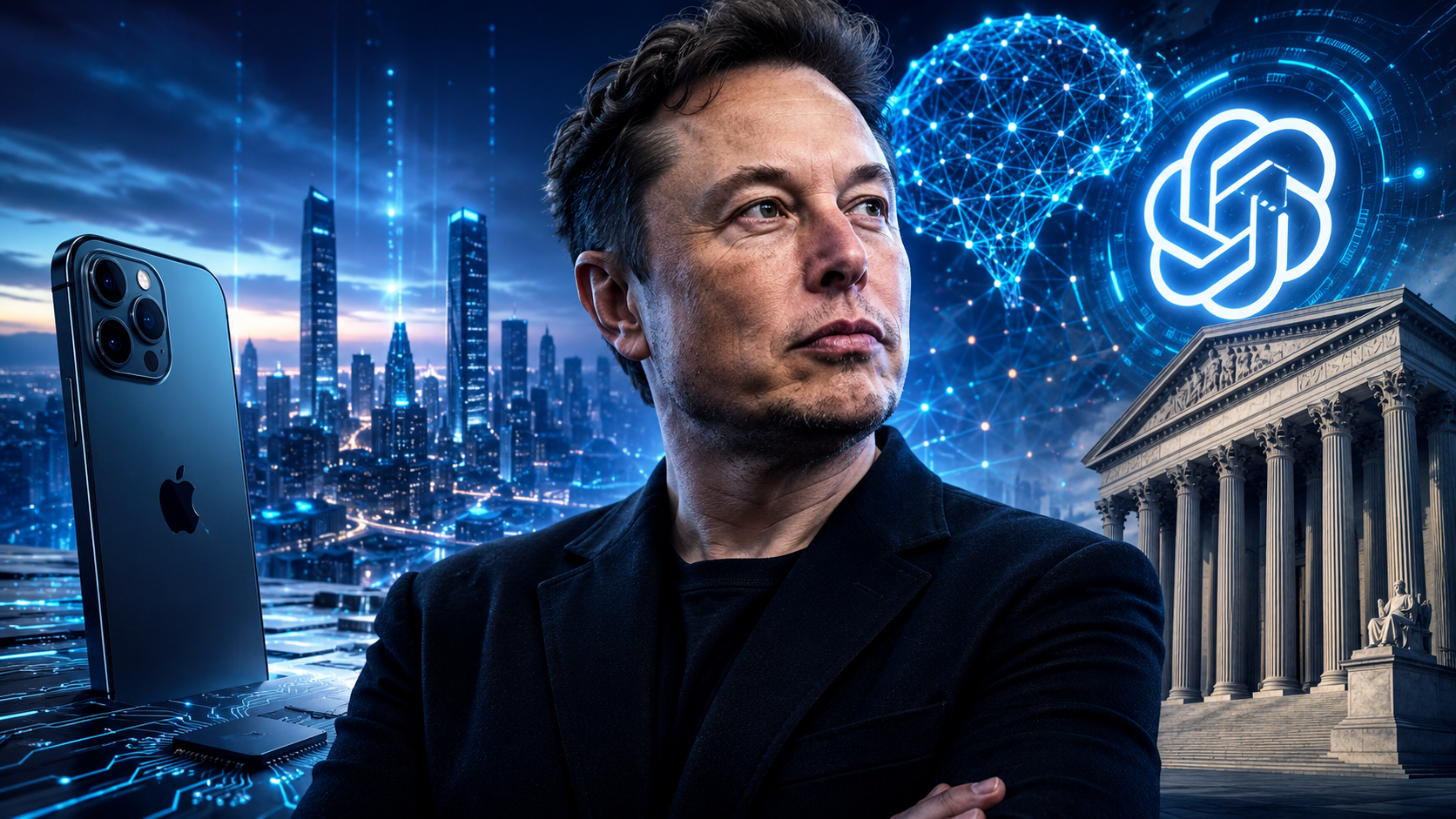

Elon Musk and the Apple–OpenAI Lawsuit: What It Means for the Future of Artificial Intelligence
Table of Contents
- Introduction
- Why This Story Matters
- Understanding the Apple–OpenAI Legal Dispute
- Why Elon Musk Became Part of the Conversation
- The Long-Running Musk vs. OpenAI Story
- Apple’s AI Strategy Explained
- OpenAI’s Rapid Rise
- Timeline of Key Events
- How This Lawsuit Could Reshape the AI Industry
- Key Takeaways
Introduction
Artificial intelligence has become one of the most competitive industries in modern technology. Companies that once worked together are now competing aggressively for talent, intellectual property, market share, and consumer trust. Every major technology company is investing billions of dollars to secure a leading position in what many experts believe will define the next generation of computing.
Among the biggest names in this race are Apple, OpenAI, Microsoft, Google, Meta, NVIDIA, xAI, and Tesla. Each company has adopted a different strategy for developing AI products, attracting engineering talent, and building ecosystems that can support millions of users.
Recently, a high-profile legal dispute involving Apple and OpenAI attracted widespread attention across the technology industry. The situation became even more interesting when Elon Musk publicly reacted to the controversy, reigniting discussions about his long-standing disagreements with OpenAI and its leadership.
Although the lawsuit itself centers on legal questions involving intellectual property and confidential business information, its impact reaches much further. Investors, developers, regulators, and everyday technology users are all watching closely because the outcome could influence how AI companies collaborate, compete, and innovate in the years ahead.
This article explores the broader story behind the dispute, why Elon Musk’s comments gained so much attention, and what the controversy could mean for the future of artificial intelligence.
Why This Story Matters
Artificial intelligence is no longer a niche field reserved for researchers. It now affects nearly every aspect of modern life, including:
- Search engines
- Smartphones
- Healthcare
- Education
- Software development
- Financial services
- Customer support
- Entertainment
- Manufacturing
- Scientific research
Because AI has become deeply integrated into both business and consumer products, disputes involving leading AI companies often have consequences far beyond the courtroom.
When companies accuse one another of improperly using confidential information, several important questions emerge:
- How should companies protect trade secrets?
- Where is the line between employee experience and confidential knowledge?
- How can innovation continue without unfair competitive advantages?
- Should governments impose stronger regulations on AI development?
These questions have become increasingly important as competition intensifies.
Understanding the Apple–OpenAI Legal Dispute
The reported dispute between Apple and OpenAI focuses on allegations involving proprietary information and intellectual property.
Although legal proceedings ultimately determine the facts, the controversy highlights an issue that has become increasingly common in high-tech industries: protecting confidential business information when experienced employees move between competing organizations.
Technology companies invest enormous resources into:
- AI research
- Custom silicon
- Machine learning models
- Security architecture
- Product roadmaps
- Software optimization
- User experience
- Data infrastructure
Many of these innovations remain confidential for years before they become public products.
Because highly specialized AI engineers are in extremely high demand, companies frequently recruit talent from competitors. This movement benefits innovation but also creates legal challenges when employers believe sensitive information may have been transferred improperly.
Trade secret disputes are therefore not unusual in Silicon Valley, but when they involve globally recognized companies such as Apple and OpenAI, they naturally receive much greater public attention.
Why Elon Musk Became Part of the Conversation
Although Elon Musk is not a party to the reported lawsuit, his reaction quickly became one of the most discussed aspects of the story.
There are several reasons why his comments attracted widespread attention.
1. Musk Helped Launch OpenAI
Many people forget that Elon Musk was among the original supporters of OpenAI during its early years.
The organization initially presented itself as a research-focused initiative dedicated to advancing artificial intelligence in ways that would benefit humanity.
Over time, however, OpenAI evolved into a commercial company that develops products used by hundreds of millions of people worldwide.
Musk has repeatedly criticized this transformation, arguing that the organization’s direction changed significantly from its original mission.
2. His Public Disagreements with Sam Altman
Elon Musk and OpenAI CEO Sam Altman have exchanged public criticism for several years.
Their disagreements involve topics such as:
- AI safety
- Corporate governance
- Open-source development
- Commercial partnerships
- Competition
- Transparency
- Regulatory policy
Because of this history, nearly every major OpenAI development tends to generate public commentary from Musk.
3. Musk Now Operates His Own AI Company
Competition has intensified because Musk is no longer merely commenting from the outside.
He now leads xAI, a company focused on developing advanced artificial intelligence systems.
This means his observations are viewed not only as personal opinions but also through the lens of industry competition.
As AI becomes one of the world’s largest technology markets, every statement made by major industry leaders can influence public perception, investor sentiment, and media coverage.
The Long-Running Musk vs. OpenAI Story
Understanding today’s headlines requires looking back several years.
The Early Days
OpenAI originally attracted attention as a nonprofit research organization focused on creating beneficial artificial intelligence.
Many prominent technology leaders supported its mission.
The goal was ambitious:
Develop advanced AI while minimizing risks associated with uncontrolled development.
At the time, collaboration and openness were emphasized more heavily than commercial competition.
A Different Direction
As AI research became more expensive, organizations needed significantly larger financial resources.
Training modern AI models requires:
- Massive computing infrastructure
- Specialized chips
- Electricity
- Data centers
- Highly skilled researchers
- Global cloud infrastructure
The costs now reach billions of dollars.
To support continued development, OpenAI adopted a commercial structure capable of raising large investments.
That decision fundamentally changed how many observers viewed the organization.
Some believed commercialization was necessary.
Others argued it conflicted with the original vision.
Musk’s Criticism
Elon Musk has consistently argued that advanced AI should prioritize openness, transparency, and safety.
He has also questioned the concentration of AI capabilities among a small number of powerful companies.
Whether one agrees with his position or not, his perspective has become an influential voice in discussions about AI governance.
Whenever OpenAI faces controversy, Musk’s reactions often receive almost as much attention as the underlying event itself.
Apple’s AI Strategy Explained
Apple has traditionally approached artificial intelligence differently from many competitors.
Instead of releasing experimental products rapidly, Apple generally focuses on:
- Privacy
- Security
- Hardware integration
- Efficient on-device processing
- User experience
Rather than emphasizing headline-grabbing AI announcements, Apple often integrates machine learning quietly into existing products.
Examples include:
- Camera improvements
- Face recognition
- Voice processing
- Battery optimization
- Accessibility features
- Language processing
This gradual strategy differs from companies racing to deploy increasingly capable conversational AI systems.
Privacy as a Competitive Advantage
Apple has built much of its reputation around protecting user privacy.
Its AI strategy reflects that philosophy.
Whenever possible, Apple prefers processing information directly on devices instead of transmitting sensitive personal data to remote servers.
This approach reduces certain privacy risks while also creating unique engineering challenges.
Building powerful AI models capable of operating efficiently on smartphones requires significant optimization.
The Growing Importance of AI
Although Apple entered the generative AI conversation later than some competitors, industry observers increasingly expect AI to become central to future Apple products.
Potential areas include:
- Smarter Siri interactions
- Writing assistance
- Image generation
- Productivity tools
- Personalized recommendations
- Health insights
- Education features
- Developer tools
As AI becomes more deeply integrated into consumer electronics, protecting proprietary technology becomes even more valuable.
OpenAI’s Rapid Rise
Few companies have grown as quickly as OpenAI.
Its AI systems introduced millions of people to conversational artificial intelligence, fundamentally changing public expectations about what software can accomplish.
Businesses rapidly adopted AI for tasks including:
- Customer support
- Content creation
- Programming assistance
- Research
- Data analysis
- Translation
- Marketing
- Education
The company also accelerated competition across the technology industry.
Nearly every major software company has since announced significant AI investments.
Scaling at an Extraordinary Pace
Rapid growth creates unique challenges.
Organizations expanding quickly must simultaneously manage:
- Hiring
- Security
- Compliance
- Infrastructure
- Product development
- Partnerships
- Legal risk
Balancing innovation with operational discipline becomes increasingly difficult as organizations grow larger.
This broader context helps explain why disputes involving confidential information have become more common across the AI sector.
Timeline of Major Events
| Year | Development |
|---|---|
| Early AI era | OpenAI begins as a research-focused organization. |
| Following years | Commercial AI investment accelerates dramatically. |
| AI boom | Generative AI reaches mainstream adoption. |
| Competitive expansion | Apple, Microsoft, Google, Meta, xAI, and others intensify AI development. |
| Recent developments | Legal disputes over intellectual property and trade secrets become increasingly common across the technology industry. |
| Current situation | Elon Musk publicly comments on the Apple–OpenAI controversy, adding another chapter to the broader debate over AI competition. |
How This Lawsuit Could Reshape the AI Industry
Even before any final legal outcome, disputes like this can influence industry behavior.
Companies may begin investing more heavily in:
- Internal security
- Employee compliance programs
- Trade secret protection
- Recruitment policies
- Data governance
- AI auditing
- Legal oversight
- Vendor management
The AI industry is still evolving rapidly.
As competition increases, legal frameworks will likely become just as important as technical innovation.
Organizations must now balance:
- Speed
- Innovation
- Collaboration
- Intellectual property protection
- Ethical responsibility
- Regulatory compliance
The companies that succeed will likely be those that can manage all of these priorities simultaneously.
Key Takeaways
The Apple–OpenAI legal dispute represents more than a disagreement between two technology companies. It reflects the growing importance of intellectual property, talent competition, and trust in an industry that is reshaping how people work, communicate, and create.
Elon Musk’s involvement in the public conversation has amplified interest because of his history with OpenAI, his ongoing disagreements with its leadership, and his current role as the founder of a competing AI company. While the legal process will determine the facts of the case, the broader discussion has already highlighted the challenges facing companies operating at the forefront of AI innovation.
Elon Musk and the Apple–OpenAI Lawsuit: What It Means for the Future of Artificial Intelligence
The Growing Importance of Intellectual Property in Artificial Intelligence
Artificial intelligence is transforming nearly every industry, from healthcare and finance to education and entertainment. While AI models often receive the most public attention, the technology behind them extends far beyond a single chatbot or application. Companies invest years developing specialized algorithms, training methods, hardware optimizations, security systems, and proprietary workflows.
This investment makes intellectual property one of the most valuable assets in the AI industry.
Unlike physical products, software and AI innovations can often be replicated more easily if confidential information becomes available to competitors. As a result, companies devote significant resources to protecting trade secrets and confidential business information.
Examples of valuable intellectual property include:
- AI model architectures
- Training techniques
- Data processing pipelines
- Hardware optimization methods
- Product roadmaps
- Internal research findings
- Security technologies
- Performance benchmarks
- Proprietary datasets
- Software engineering tools
The value of these assets explains why disputes involving confidential information often receive serious legal attention.
What Are Trade Secrets?
Trade secrets differ from patents or copyrights.
A patent protects an invention that has been publicly disclosed through a formal application process.
Copyright protects original creative works such as books, music, software code, and artwork.
Trade secrets, however, protect information that remains confidential because it provides a competitive advantage.
Examples include:
- Manufacturing processes
- Business strategies
- Customer acquisition methods
- Source code
- Internal documentation
- Product development plans
- Proprietary AI techniques
To maintain trade secret protection, companies generally need to demonstrate that they have taken reasonable steps to keep the information confidential.
Why Employee Mobility Creates Challenges
The technology industry has long encouraged talented engineers to move between companies.
Employees frequently transition among major organizations, bringing valuable experience and fresh ideas. This movement often benefits innovation because knowledge gained from solving difficult engineering problems can inspire improvements elsewhere.
However, there is an important distinction between:
- General professional knowledge acquired through experience.
- Confidential information belonging to a former employer.
Companies expect employees to apply their skills, but they are generally prohibited from using or disclosing protected trade secrets belonging to previous employers.
Maintaining that boundary becomes increasingly difficult in highly specialized fields such as artificial intelligence, where experienced engineers possess deep technical expertise.
Why AI Companies Are Competing More Aggressively Than Ever
Artificial intelligence has become one of the fastest-growing sectors in technology.
Industry leaders view AI as a foundational technology capable of transforming:
- Consumer electronics
- Enterprise software
- Search engines
- Healthcare
- Robotics
- Scientific research
- Transportation
- Manufacturing
- Financial services
Because of these opportunities, competition has intensified dramatically.
Today’s AI race involves several interconnected areas:
| Area | Why It Matters |
|---|---|
| Computing power | Training advanced models requires enormous processing capacity. |
| AI chips | Specialized hardware improves speed and efficiency. |
| Engineering talent | Experienced AI researchers are in extremely high demand. |
| Cloud infrastructure | Large-scale deployment depends on reliable computing resources. |
| Consumer adoption | User engagement determines commercial success. |
| Strategic partnerships | Collaboration expands market reach and capabilities. |
Each of these areas influences long-term competitiveness.
Elon Musk’s Vision for Artificial Intelligence
Elon Musk has spoken about artificial intelligence for more than a decade.
His views combine optimism about AI’s potential with concerns regarding its long-term risks.
Several themes frequently appear in his public discussions.
1. AI Safety
Musk has repeatedly argued that advanced AI should be developed responsibly.
He has suggested that companies building increasingly capable AI systems should prioritize safety testing and risk management.
Supporters believe this approach encourages responsible innovation.
Critics argue that balancing rapid technological progress with extensive safeguards remains challenging.
2. Competition Encourages Innovation
Although Musk has criticized aspects of the current AI landscape, he also believes competition drives technological advancement.
The emergence of multiple AI companies creates alternatives for businesses and consumers while encouraging faster innovation.
Instead of relying on a single dominant provider, organizations can evaluate competing platforms based on performance, pricing, privacy, and specialized capabilities.
3. Transparency
One recurring theme in Musk’s comments has been transparency.
He has questioned whether advanced AI systems should be more open regarding their development methods, governance, and long-term objectives.
Transparency remains a complex issue because companies also need to protect intellectual property and maintain security.
Finding the right balance continues to be a topic of debate across the industry.
How xAI Fits Into the Bigger Picture
Elon Musk’s AI company, xAI, represents another major participant in the rapidly evolving AI ecosystem.
Its creation reflects Musk’s desire to contribute directly to AI development rather than simply commenting on industry trends.
Like other AI organizations, xAI is working on:
- Large language models
- Advanced reasoning capabilities
- Coding assistance
- Scientific applications
- Enterprise solutions
- Consumer AI experiences
Competition among these companies benefits users by encouraging faster innovation, improved products, and greater choice.
Apple’s Position in the AI Race
For years, Apple focused primarily on integrating machine learning into existing products rather than launching standalone AI platforms.
This strategy emphasized:
- Privacy
- Device performance
- Battery efficiency
- User experience
- Security
- Seamless hardware integration
More recently, however, generative AI has become increasingly important across the technology industry.
Consumers now expect intelligent features such as:
- Writing assistance
- Image generation
- Voice interaction
- Smart search
- Productivity enhancements
- Personalized recommendations
These changing expectations have accelerated Apple’s AI investments.
OpenAI’s Expanding Ecosystem
OpenAI has evolved from a research-focused organization into a company supporting businesses, developers, educators, and consumers.
Its ecosystem now includes AI tools for:
- Writing
- Programming
- Research
- Customer service
- Education
- Content creation
- Data analysis
- Productivity
Rapid expansion has created enormous commercial opportunities while also increasing legal, regulatory, and operational responsibilities.
Why Investors Care About Legal Disputes
Legal disputes rarely affect only the companies directly involved.
Investors closely monitor litigation because lawsuits may influence:
- Company reputation
- Financial performance
- Product development
- Strategic partnerships
- Hiring practices
- Regulatory scrutiny
While many lawsuits are resolved without major disruption, high-profile cases can create uncertainty regarding future business strategies.
That uncertainty often attracts significant media attention.
AI Regulation Is Becoming More Important
Governments around the world are actively considering how artificial intelligence should be regulated.
Key policy discussions include:
Data Privacy
How should companies collect, store, and process user information?
Privacy protections vary across jurisdictions, making compliance increasingly complex for global technology companies.
Transparency
Should AI systems explain how they reach conclusions?
Improved transparency could increase public trust while helping organizations identify potential biases.
Accountability
When AI systems produce harmful or inaccurate results, determining responsibility becomes challenging.
Possible stakeholders include:
- Developers
- Platform providers
- Businesses deploying AI
- End users
Legal frameworks continue evolving to address these questions.
National Security
Artificial intelligence has strategic importance beyond commercial applications.
Governments recognize AI’s potential impact on:
- Defense
- Cybersecurity
- Scientific research
- Critical infrastructure
- Economic competitiveness
Consequently, policymakers increasingly view AI leadership as a matter of national interest.
The AI Talent War
One of the most valuable resources in artificial intelligence is not hardware—it is people.
Experienced AI researchers remain in exceptionally high demand.
Companies compete aggressively to recruit specialists with expertise in:
- Machine learning
- Deep learning
- Distributed computing
- Reinforcement learning
- Robotics
- Natural language processing
- Computer vision
- Systems engineering
Strong demand has contributed to highly competitive compensation packages and increased employee mobility.
This dynamic also explains why companies pay close attention to protecting confidential information when employees change organizations.
Public Perception Matters
Technology companies increasingly recognize that public trust influences long-term success.
Consumers consider factors such as:
- Privacy
- Security
- Reliability
- Ethical practices
- Transparency
- Customer support
Legal disputes can shape public perception regardless of the eventual outcome.
For this reason, companies often communicate carefully during ongoing litigation, avoiding statements that could affect legal proceedings.
The Role of Social Media
Modern technology news spreads rapidly through social media platforms.
Executives, journalists, analysts, developers, and investors frequently discuss breaking developments in real time.
When influential figures such as Elon Musk comment publicly, their observations often receive global attention within minutes.
This dynamic creates several effects:
- Increased media coverage
- Broader public discussion
- Investor interest
- Industry analysis
- Policy debates
Social media has become an important part of how technology stories evolve beyond traditional news reporting.
Lessons for Businesses
Regardless of industry, organizations can learn several valuable lessons from high-profile technology disputes.
Protect Confidential Information
Businesses should establish clear policies regarding:
- Data security
- Employee access controls
- Confidential documentation
- Intellectual property management
Invest in Compliance
Strong compliance programs reduce legal risks while encouraging responsible innovation.
Training employees on confidentiality obligations helps protect both companies and workers.
Encourage Ethical Innovation
Long-term success depends on balancing innovation with responsibility.
Organizations that prioritize ethics, transparency, and security often build stronger relationships with customers.
Build Trust
Trust remains one of the most valuable competitive advantages in technology.
Consumers increasingly evaluate companies based not only on product quality but also on privacy, reliability, and corporate responsibility.
Key Insights
The reported Apple–OpenAI legal dispute illustrates how valuable intellectual property has become in the era of artificial intelligence. As AI companies invest billions of dollars into research, infrastructure, and talent, protecting confidential information has become a strategic priority.
Elon Musk’s public reaction drew attention because of his long-standing relationship with OpenAI and his role as the founder of xAI, a competing AI company. His comments also reflect broader debates about transparency, AI safety, and the direction of the industry.
Beyond the legal issues themselves, the controversy highlights several larger trends: increasing competition for AI talent, growing regulatory interest, heightened investor attention, and the importance of maintaining public trust. These developments are shaping not only today’s AI landscape but also the future of how advanced technologies will be developed, governed, and adopted worldwide.
Elon Musk and the Apple–OpenAI Lawsuit: What It Means for the Future of Artificial Intelligence
The Future of AI Competition
Artificial intelligence is still in its early stages compared to other major technology revolutions such as personal computers, smartphones, and cloud computing. While today’s AI tools have already transformed how people search for information, write content, develop software, and automate repetitive tasks, the technology is expected to become even more capable over the next decade.
The competition among leading technology companies is no longer centered solely on creating the smartest chatbot. Instead, the focus is expanding to include:
- AI-powered operating systems
- Intelligent personal assistants
- Enterprise automation
- Robotics
- Healthcare applications
- Autonomous transportation
- Scientific research
- Personalized education
- Software development
- Creative tools
As these areas continue to evolve, companies will compete on much more than model performance.
The Next Phase of the AI Race
The first wave of generative AI introduced millions of people to conversational assistants capable of answering questions, generating text, and assisting with creative tasks.
The next phase is expected to emphasize:
Better Reasoning
Future AI systems will likely solve increasingly complex problems by combining reasoning, planning, and memory.
Potential improvements include:
- Multi-step analysis
- Better coding capabilities
- Scientific problem solving
- Financial modeling
- Medical research assistance
- Engineering design
Greater Personalization
Consumers increasingly expect AI to understand preferences while respecting privacy.
Future assistants may provide:
- Personalized recommendations
- Smarter scheduling
- Customized learning experiences
- Context-aware productivity tools
- Adaptive interfaces
Balancing personalization with responsible data handling will remain an important challenge.
Multimodal Experiences
Modern AI already processes text, images, audio, and video.
Future systems may combine these capabilities more seamlessly, allowing users to:
- Speak naturally with AI assistants
- Edit videos using voice commands
- Generate presentations automatically
- Analyze documents alongside images
- Interact with augmented reality environments
How Apple Could Respond
Apple has traditionally entered emerging markets later than some competitors but focused on refining products before widespread release.
Its strengths include:
- Integrated hardware and software
- Strong privacy reputation
- Loyal customer base
- Efficient chip design
- Mature developer ecosystem
Future AI developments may further integrate intelligence across Apple’s ecosystem, enhancing productivity, accessibility, and user convenience while emphasizing on-device processing where possible.
OpenAI’s Road Ahead
OpenAI has played a significant role in bringing generative AI into the mainstream.
Looking ahead, its priorities may include:
- Improving model reliability
- Expanding enterprise services
- Supporting developers
- Advancing multimodal AI
- Strengthening security
- Building long-term partnerships
- Enhancing transparency around AI capabilities and limitations
As adoption grows, the company will also face increasing expectations from regulators, businesses, and consumers.
Elon Musk’s Continuing Influence on AI
Regardless of differing opinions about his public statements, Elon Musk remains one of the most influential voices in discussions about artificial intelligence.
His influence stems from several factors:
Entrepreneurial Experience
Musk has led companies operating in:
- Electric vehicles
- Space exploration
- Renewable energy
- Brain-computer interfaces
- Artificial intelligence
This diverse experience gives his views broad visibility.
Public Engagement
Unlike many technology executives, Musk frequently shares opinions directly with the public through interviews and social media.
His comments often spark conversations extending far beyond the technology community.
Industry Competition
As the founder of xAI, Musk participates directly in the competitive AI landscape.
His company contributes another perspective to ongoing debates regarding AI development, governance, and innovation.
What Businesses Can Learn
Regardless of the eventual outcome of any legal dispute, organizations across industries can draw valuable lessons from recent developments in AI.
1. Invest in Innovation
Sustainable innovation requires continuous investment in research, talent, and infrastructure.
2. Protect Intellectual Property
Strong internal policies help safeguard confidential information while encouraging collaboration.
3. Prioritize Ethics
Responsible AI development includes:
- Fairness
- Privacy
- Transparency
- Security
- Human oversight
4. Build Long-Term Trust
Consumers increasingly reward companies that demonstrate reliability, accountability, and respect for user privacy.
Common Myths About AI Competition
Myth: Only one company will dominate AI.
Reality: The AI ecosystem is large enough to support multiple successful companies serving different markets and use cases.
Myth: Bigger AI models always produce better results.
Reality: Model quality depends on many factors, including training methods, optimization, efficiency, safety, and real-world usability.
Myth: AI will replace every job.
Reality: AI is more likely to automate specific tasks while creating new roles requiring human judgment, creativity, and oversight.
Myth: Legal disputes stop innovation.
Reality: While lawsuits may create temporary uncertainty, technological progress typically continues as companies adapt and improve compliance practices.
Frequently Asked Questions (FAQs)
Why is Elon Musk connected to OpenAI?
Elon Musk was among the early supporters of OpenAI before leaving the organization. He has since expressed differing views about its direction and now leads xAI, a separate artificial intelligence company.
Is Elon Musk involved in the Apple–OpenAI lawsuit?
Public reporting has focused on Apple and OpenAI in the legal dispute. Elon Musk is not reported as a party to the case but commented publicly on the situation, attracting significant media attention.
Why are trade secrets important in AI?
Trade secrets protect confidential business information that provides a competitive advantage, such as proprietary algorithms, engineering processes, and product development strategies.
Why is AI talent so valuable?
Developing advanced AI systems requires highly specialized expertise in machine learning, distributed computing, mathematics, and software engineering. Experienced professionals remain in high demand worldwide.
How could legal disputes affect AI development?
Legal disputes may encourage stronger security practices, improved compliance programs, and clearer policies regarding confidential information without necessarily slowing overall technological progress.
Will AI regulation increase?
Many governments are actively developing AI regulations addressing issues such as privacy, transparency, accountability, and security. The exact rules will continue evolving alongside the technology.
Does competition benefit consumers?
Competition generally encourages innovation, improves product quality, expands consumer choice, and motivates companies to deliver better services.
Key Takeaways
| Topic | Summary |
|---|---|
| AI Competition | Competition continues to accelerate across the technology industry. |
| Elon Musk | Remains one of the most influential voices in AI discussions through xAI and public commentary. |
| Apple | Continues expanding its AI strategy with a focus on privacy and ecosystem integration. |
| OpenAI | Remains a leading developer of generative AI technologies while navigating rapid growth and increasing scrutiny. |
| Legal Issues | Intellectual property and trade secrets have become increasingly important in AI competition. |
| Future Outlook | AI innovation is expected to continue rapidly while regulatory oversight and corporate responsibility become more significant. |
Final Thoughts
The reported Apple–OpenAI dispute represents more than a disagreement between two technology companies. It reflects the growing importance of intellectual property, corporate governance, and responsible innovation in an industry that is reshaping the global economy.
Elon Musk’s reaction attracted attention because of his long history with OpenAI, his leadership of xAI, and his outspoken views on artificial intelligence. Whether readers agree with his perspective or not, his comments continue to influence public conversations about AI’s future.
Looking ahead, the AI industry will likely remain highly competitive. Companies will invest heavily in research, infrastructure, and talent while navigating increasingly complex legal and regulatory environments. Success will depend not only on technological breakthroughs but also on earning the trust of users, businesses, and policymakers.
For consumers, developers, and investors, one thing is clear: the evolution of artificial intelligence is far from over. The decisions made today—whether in boardrooms, research labs, or courtrooms—will help shape how AI technologies are developed, governed, and integrated into everyday life for years to come.