
Apple iPhone Upgrade Program (2026): Complete Guide to Apple’s New Monthly Upgrade Plan
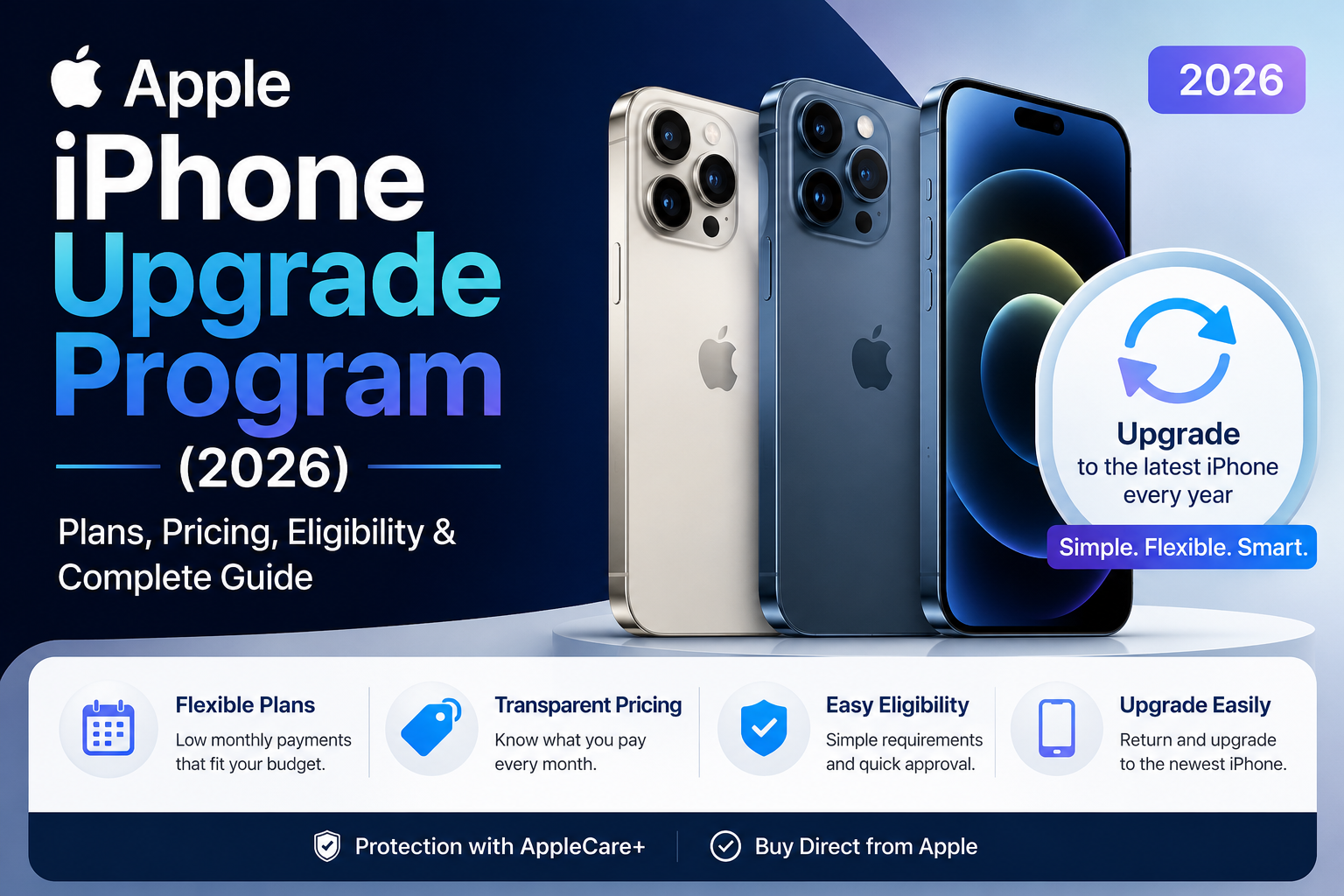
Apple has continuously reshaped the way people buy smartphones. Instead of asking customers to pay a large amount upfront every few years, the company has steadily expanded financing, trade-in options, and instalment plans that make upgrading more affordable. In 2026, the apple iphone upgrade program introduced another significant evolution to this strategy by launching a new subscription-style upgrade experience in the United States.
Rather than simply financing a phone until it’s paid off, the latest Apple iPhone Upgrade Program focuses on predictable monthly payments, annual upgrades, integrated protection, and a streamlined purchasing experience. For many users, it removes much of the complexity involved in deciding when to upgrade or how to sell an older device.
If you’re wondering whether this programme is better than purchasing an iPhone outright, using a carrier instalment plan, or relying on traditional financing, this guide explains everything you need to know.
In this first part, we’ll explore how the Apple iPhone Upgrade Program works, what’s changed in 2026, who qualifies, how monthly pricing compares, and whether it makes financial sense for different types of users.
What Is the Apple iPhone Upgrade Program?
The Apple iPhone Upgrade Program is a monthly payment plan designed to give customers access to the latest iPhone models while spreading the cost over manageable monthly instalments.
Unlike purchasing a phone outright, the programme allows eligible customers to:
- Pay a fixed monthly amount
- Upgrade to a newer iPhone after meeting eligibility requirements
- Keep their payments predictable
- Purchase directly through Apple instead of a wireless carrier
- Enjoy a simplified upgrade process
The concept appeals especially to customers who prefer having the newest technology every year without needing to sell their previous phone privately.
Instead of treating a smartphone as a long-term purchase, the program encourages viewing it more like an ongoing technology subscription.
Why Apple Introduced a New Upgrade Model in 2026
Smartphone ownership habits have changed dramatically over the past decade.
Years ago, many consumers replaced their phones every two years because carrier contracts encouraged frequent upgrades. Today, flagship smartphones last much longer, often remaining capable for four to six years.
While this benefits consumers, it also means manufacturers sell fewer new devices each year.
Apple’s latest upgrade initiative addresses several trends simultaneously:
1. Customers Prefer Lower Monthly Costs
Rather than spending over $1,000 in a single purchase, many buyers now prefer predictable monthly expenses.
Monthly payment options reduce the financial barrier for premium devices.
2. Consumers Upgrade Less Frequently
Modern iPhones remain fast and capable for many years.
Apple’s upgrade model provides an incentive for users who enjoy always owning the newest hardware.
3. Simplified Ownership
Selling an old smartphone can involve:
- Finding buyers
- Negotiating prices
- Checking device condition
- Shipping
- Payment risks
The new programme reduces much of this effort.
4. Better Integration
Apple increasingly connects its hardware, software, services, and support into one ecosystem.
The upgrade programme fits naturally alongside services like the following:
- iCloud
- Apple Music
- Apple TV+
- AppleCare+
- Apple One
The result is a more unified customer experience.
How the Apple iPhone Upgrade Program Works
Although the exact experience depends on approval and device availability, the overall process is straightforward.
Step 1: Choose Your iPhone
Customers select the iPhone model they want through Apple.
Available choices generally include:
- Standard iPhone
- Plus models
- Pro models
- Pro Max models
Storage capacity and colour options are selected during checkout.
Step 2: Apply During Purchase
Rather than paying the full retail price, customers apply for the upgrade programme during checkout.
Approval typically depends on standard eligibility requirements.
Step 3: Pay Monthly
Instead of making one large payment, customers pay a consistent monthly amount.
Monthly costs vary depending on:
- iPhone model
- Storage option
- Protection coverage
- Applicable taxes
Step 4: Use Your Device Normally
The phone functions exactly like any other purchased iPhone.
There are no software limitations or reduced functionality.
Customers continue using:
- Face ID
- Apple Intelligence features
- iMessage
- App Store
- iCloud
- Apple Wallet
- Apple Pay
Step 5: Upgrade When Eligible
Once upgrade eligibility requirements are met, customers may move to the latest iPhone model.
Instead of beginning the purchasing process from scratch, eligible users can transition into a newer device while continuing monthly payments under the new agreement.
How Is This Different From Traditional Financing?
Many people assume financing and upgrading are identical.
They are not.
| Traditional Financing | Apple iPhone Upgrade Program |
|---|---|
| The goal is full ownership | The goal is flexible upgrading |
| The phone eventually becomes fully paid off | Customers may upgrade before long-term ownership |
| Often tied to carriers | Purchased directly through Apple |
| Trade-in handled separately | The upgrade process is integrated |
| Focus on paying the balance. | Focus on continuous access to newer models |
This distinction is important.
If your goal is owning a device for many years, traditional financing may offer better long-term value.
If your priority is always having the newest iPhone, the upgrade model may be more attractive.
Who Is the Apple iPhone Upgrade Programme? Best For?
Not everyone upgrades their smartphone at the same pace.
Let’s look at different user types.
Ideal For Technology Enthusiasts
Some users genuinely enjoy trying Apple’s newest innovations every year.
These customers appreciate:
- Better cameras
- Faster processors
- Improved displays
- New AI capabilities
- Battery improvements
For them, predictable upgrades are often worth the monthly expense.
Professionals
Many professionals rely heavily on their phones for:
- Business communication
- Photography
- Content creation
- Travel
- Remote work
Using the newest hardware can improve productivity and reliability.
Content Creators
Video creators, photographers, influencers, and social media professionals often benefit from:
- Improved image quality
- Better stabilization
- Faster editing
- Enhanced AI editing tools
The latest camera technology can become a business advantage.
Frequent Travelers
Business travellers may value the following:
- Longer battery life
- Better cellular connectivity
- Satellite communication features
- Improved durability
Upgrading regularly ensures access to Apple’s latest connectivity improvements.
Apple Ecosystem Users
People who already own:
- Mac
- Apple Watch
- iPad
- AirPods
- Apple TV
often gain additional value from remaining within Apple’s hardware ecosystem.
Who Might Want to Skip It?
The upgrade programme isn’t automatically the best choice for everyone.
It may be less suitable for:
Budget-Conscious Buyers
If you typically keep an iPhone for five or six years, purchasing outright could cost less over time.
Casual Users
Many people primarily use their phones for:
- Calling
- Texting
- Web browsing
- Social media
These activities rarely require annual hardware upgrades.
Users Happy With Older Devices
Apple provides software updates for many years.
A two- or three-year-old iPhone often performs exceptionally well for everyday tasks.
Potential Benefits of the Apple iPhone Upgrade Program
Every purchasing option has advantages.
Some of the biggest potential benefits include:
Predictable Monthly Payments
Rather than making a large one-time purchase, costs remain consistent.
Budgeting becomes easier.
Easier Annual Upgrades
Instead of selling your current phone independently, the process becomes more streamlined.
Direct Relationship With Apple
Buying directly from Apple rather than through a carrier may simplify:
- Support
- Device setup
- Repairs
- Future upgrades
Premium Device Access
Higher-end iPhone models become more financially accessible through monthly payments.
Flexible Ownership Experience
Customers who enjoy having the newest hardware avoid waiting several years between upgrades.
Possible Drawbacks
No upgrade program is perfect.
Potential disadvantages include the following:
Long-Term Cost
People who rarely upgrade may spend more overall compared with purchasing and keeping a device for many years.
Eligibility Requirements
Approval isn’t guaranteed.
Some customers may not qualify depending on financing requirements.
Device Condition Expectations
Upgrading generally requires returning the existing device in acceptable condition.
Excessive damage could affect the upgrade process.
Annual Upgrades Aren’t Always Necessary
Apple’s improvements are becoming more incremental.
For many users, a one-year-old iPhone already delivers outstanding performance.
Monthly Pricing: What Can Customers Expect?
Monthly pricing depends on several factors, including:
- iPhone model
- Storage capacity
- Protection options
- Taxes
- Applicable fees
Generally, entry-level models have the lowest monthly cost, while Pro and Pro Max devices command higher payments due to their premium hardware.
| Device Category | Typical Monthly Cost Trend |
|---|---|
| Standard iPhone | Lowest monthly payment |
| Plus Models | Slightly higher |
| Pro Models | Mid-to-high monthly payment |
| Pro Max Models | Highest monthly payment |
| Higher Storage Options | Increase monthly cost |
While monthly payments make premium devices more accessible, shoppers should still consider the total cost over time rather than focusing only on the monthly figure.
Buying Through Apple vs Buying Through a Carrier
Many buyers automatically purchase phones from their mobile provider.
However, purchasing directly through Apple offers several differences.
| Apple Purchase | Carrier Purchase |
|---|---|
| Device purchased directly from Apple | Purchased through wireless provider |
| Upgrade experience managed by Apple | Upgrade rules vary by carrier |
| Greater flexibility when changing carriers | May be tied to carrier agreements |
| Apple-focused support | Carrier support first |
Choosing between the two often comes down to whether you prefer a direct relationship with Apple or the convenience of bundling your phone payment with your wireless bill.
How the 2026 Apple iPhone Upgrade Program Differs From Previous Apple Upgrade Options
Apple has offered financing and upgrade solutions for years, but the 2026 version reflects a broader shift in strategy.
Instead of focusing primarily on instalment financing, the company is moving toward a more subscription-like ownership experience.
Several important changes stand out.
A Simpler Customer Journey
Previously, customers often had to understand multiple financing options, trade-in values, loan terms, and payment schedules.
The newer system aims to reduce that complexity by creating a smoother upgrade path from one iPhone generation to the next.
Customers can focus more on choosing their preferred device and less on navigating multiple financial products.
Greater Focus on Monthly Affordability
Rather than highlighting the full retail cost of an iPhone, Apple now places greater emphasis on manageable monthly payments.
This reflects broader consumer trends across industries where people increasingly prefer predictable recurring expenses over large one-time purchases.
Improved Integration With Apple’s Online Store
Apple continues investing heavily in direct-to-consumer sales.
The new upgrade experience integrates more naturally into Apple’s online shopping process, making it easier for customers to:
- Browse models
- Compare storage options
- Choose accessories
- Add protection
- Complete financing
- Prepare for future upgrades
Apple Upgrade Program vs Buying an iPhone Outright
Many shoppers still wonder whether paying the full purchase price remains the smartest financial decision.
The answer depends entirely on your habits.
Buying Outright Makes Sense If You:
- Keep phones for four to six years
- Prefer complete ownership immediately
- Avoid monthly commitments
- Like selling devices independently
- Rarely upgrade
For long-term owners, purchasing outright often results in the lowest overall cost of ownership.
The upgrade programme makes sense if you:
- Want the newest iPhone every year
- Prefer predictable monthly payments
- Don’t want to sell used devices
- Enjoy the latest camera technology
- Value convenience over maximum savings
Instead of comparing only monthly payments, consumers should calculate the total cost over the number of years they typically keep a smartphone.
Apple Upgrade Program vs Carrier Upgrade Plans
Wireless carriers have offered upgrade promotions for years.
However, their plans often work differently from Apple’s own programme.
Carrier Plans Usually Include
- Promotional discounts
- Bill credits
- Trade-in incentives
- Multi-year commitments
- Service requirements
Some offers appear extremely attractive initially but require customers to remain with the same carrier for an extended period.
Changing providers early may affect promotional credits or remaining balances.
Apple’s Direct Programme Offers
- Purchasing directly from Apple
- Greater flexibility
- Independent hardware purchasing
- A more consistent Apple-focused experience
- Easier integration with Apple’s ecosystem
For customers who frequently switch mobile providers, buying directly through Apple may provide additional flexibility.
Comparing the Main Purchase Options
| Feature | Apple Upgrade Program | Carrier Financing | Buy Outright |
|---|---|---|---|
| Large upfront payment | No | Usually no. | Yes |
| Monthly payments | Yes | Yes | No |
| Annual upgrade potential | Yes | Sometimes | Only by purchasing again |
| Full ownership immediately | No | No | Yes |
| Direct Apple purchase | Yes | No | Yes |
| Easy to switch carriers | Generally easier | May depend on carrier | Yes |
| Best for latest technology | Excellent | Good | Depends on user |
Understanding Apple’s Financing Partnership
One of the biggest developments in 2026 is Apple’s decision to work with a new financing partner for its latest upgrade offering.
Rather than simply processing a traditional loan, the partnership helps create a smoother purchasing experience directly through Apple’s ecosystem.
For customers, the process feels largely integrated into the Apple Store experience.
Behind the scenes, however, financing approval, payment management, and account administration are handled through Apple’s chosen financial partner.
This arrangement allows Apple to focus on:
- Product design
- Customer experience
- Hardware innovation
- Software integration
while financial services are managed by a specialist in consumer financing.
Why Apple Chose This Direction
Several market trends likely influenced Apple’s decision.
Customers Prefer Subscriptions
Consumers already subscribe to:
- Music
- Video streaming
- Cloud storage
- Gaming
- Software
Adding smartphone ownership to this subscription mindset feels increasingly natural.
Premium Devices Cost More Than Ever
Flagship smartphones now represent a significant investment.
Monthly payments make premium devices more accessible to a wider range of customers without requiring a large upfront purchase.
Predictable Revenue
Subscription-style services provide companies with more consistent revenue compared with relying solely on one-time hardware purchases.
This model also encourages ongoing customer relationships.
What Happens During an Upgrade?
Many buyers wonder what the actual upgrade experience looks like.
Although individual circumstances vary, the general process is straightforward.
Step One
Check upgrade eligibility.
Step Two
Choose the latest eligible iPhone.
Step Three
Transfer your data from your current device.
Apple’s migration tools make this process relatively simple, allowing photos, contacts, apps, and settings to move to the new phone.
Step Four
Return the previous iPhone according to programme requirements.
Step Five
Begin payments associated with the new device.
The overall experience is designed to minimise downtime between devices.
Device Condition Matters
An important consideration for anyone planning annual upgrades is taking good care of the current device.
Returned phones are generally expected to remain in acceptable working condition.
Good habits include:
- Using a protective case
- Applying a screen protector
- Avoiding liquid damage
- Charging responsibly
- Keeping the phone clean
- Repairing significant damage promptly
Maintaining your device can help ensure a smoother upgrade experience when the time comes.
Where AppleCare+ Fits Into the Picture
For many users, smartphone protection is almost as important as the phone itself.
AppleCare+ is Apple’s extended service plan designed to help reduce the cost of certain repairs and provide additional support beyond the standard warranty.
Potential benefits may include:
- Accidental damage coverage
- Battery service under qualifying conditions
- Priority technical support
- Certified Apple repairs
- Genuine replacement parts
For customers who upgrade frequently, device protection can help preserve the condition of the phone before it is returned.
Trade-Ins vs the Upgrade Program
Many shoppers confuse these two options.
They serve different purposes.
Trade-In
You already own your iPhone.
You receive value for that device toward purchasing another one.
After the trade-in, ownership transfers permanently.
Upgrade Program
You’re participating in a structured monthly payment programme designed around future upgrades.
Instead of negotiating resale value independently, the upgrade process follows the programme’s established terms.
Should You Still Sell Your Old iPhone Yourself?
Some users achieve higher resale values through private marketplaces.
Advantages include:
- Potentially higher selling price
- Greater flexibility
- Full control over timing
However, private sales also require:
- Creating listings
- Communicating with buyers
- Negotiating prices
- Meeting strangers or shipping devices
- Handling payment securely
For many people, convenience outweighs the possibility of earning slightly more money.
Hidden Costs People Often Forget
When comparing purchase options, many shoppers focus only on the advertised monthly payment.
A more complete evaluation should include:
- Sales tax
- Accessories
- Protective cases
- Chargers (if purchased separately)
- AppleCare+
- Screen repairs
- Lost or stolen device protection
- Carrier service costs
Considering the complete ownership experience provides a more accurate picture of overall value.
Is Annual Upgrading Really Worth It?
This depends on how much you value Apple’s latest innovations.
Annual Upgrades Make Sense For
- Professional photographers
- Video creators
- Mobile gamers
- Tech reviewers
- Developers
- Professionals relying on mobile productivity
- Early adopters
These users often benefit from:
- Faster processors
- Improved battery life
- Better cameras
- Enhanced AI features
- New display technologies
Less Frequent Upgrades May Be Better For
- Students
- Families
- Casual users
- Budget-conscious buyers
- Users satisfied with current performance
Modern iPhones remain capable for years.
For everyday activities like messaging, browsing, streaming, navigation, and social media, a device that’s two or three years old may still provide an excellent experience.
Common Misconceptions About the Apple iPhone Upgrade Program
“Monthly payments mean the phone is cheaper.”
Not necessarily.
Monthly instalments spread the cost over time but don’t automatically reduce the total amount you pay.
“Everyone should upgrade every year.”
Annual upgrades are optional and depend on personal preferences, budget, and how much value you place on the latest features.
“Carrier deals are always the best.”
Some carrier promotions offer excellent value, but others require long-term commitments or specific service plans. Always compare the full terms before deciding.
“Buying outright is outdated.”
Not at all.
For people who keep their phones for many years, paying upfront can still be one of the most cost-effective options.
Expert Tips Before Joining the Program
Before signing up, consider these practical recommendations:
Evaluate Your Upgrade Cycle
Ask yourself:
- Do I normally upgrade every year?
- Every two years?
- Every four or five years?
Your answer is one of the strongest indicators of whether the programme fits your needs.
Compare the Total Cost
Don’t focus solely on the monthly payment.
Estimate the total amount you may spend over several years and compare it with buying outright or using carrier financing.
Think Beyond the Camera
While new camera features often grab headlines, improvements in battery life, processing power, AI capabilities, and software support may have a greater impact on your daily experience.
Protect Your Investment
Using a quality case and screen protector helps maintain your device’s condition, whether you plan to upgrade, trade it in, or sell it privately.
| User Type | Recommended Purchase Option |
|---|---|
| Tech enthusiast | Apple Upgrade Program |
| Content creator | Apple Upgrade Program |
| Business professional | Apple Upgrade Program |
| Budget buyer | Buy Outright or Keep Current Device Longer |
| Student | Compare Financing Carefully |
| Family purchaser | Depends on Upgrade Frequency |
| Frequent traveller | Apple Upgrade Program |
| Casual smartphone user | Buy Outright or Upgrade Less Frequently |
Frequently Asked Questions (FAQs)
1. What is the Apple iPhone Upgrade Program?
The Apple iPhone Upgrade Program is a monthly payment option that allows eligible customers to purchase an iPhone through Apple while gaining the opportunity to upgrade to a newer model when they meet the programme’s eligibility requirements. It is designed to make upgrading simpler and more predictable than paying the full purchase price upfront.
2. Is the Apple iPhone Upgrade Program available in the United States?
Yes. Apple introduced its latest version of the iPhone Upgrade Program for customers in the United States. Availability may expand over time, but customers should always check Apple’s official website for the most current information.
3. How much does the Apple iPhone upgrade programme cost?
Monthly payments vary depending on several factors, including:
- iPhone model
- Storage capacity
- Optional protection plans
- Taxes and applicable fees
Higher-end Pro models generally have higher monthly payments than standard iPhone models.
4. Can I upgrade my iPhone every year?
Eligible customers may upgrade when they satisfy the programme’s upgrade requirements. The exact timing depends on the programme terms and the condition of the returned device.
5. Do I own the iPhone immediately?
Ownership depends on the financing agreement and whether all required payments have been completed. Customers should review the specific terms associated with their purchase.
6. Is AppleCare+ included?
Some versions of Apple’s upgrade offerings may include AppleCare+, while others provide it as an optional add-on. What’s included can vary, so it’s important to review the details during checkout.
7. Can I switch mobile carriers?
Because the device is purchased directly through Apple rather than a carrier, customers often have greater flexibility than with carrier-specific financing. However, compatibility and carrier requirements should always be verified before switching.
8. What happens to my old iPhone?
During an eligible upgrade, the existing iPhone is generally returned according to the program’s terms. The device should meet the required condition standards to ensure a smooth upgrade experience.
9. What if my iPhone is damaged?
Normal wear is expected, but significant damage may affect eligibility or result in additional costs. Using a protective case and screen protector is a smart way to help maintain your device’s condition.
10. Can I pay off the balance early?
Financing terms vary depending on the agreement. Customers should review their financing documentation or contact the financing provider for details regarding early repayment.
11. Is buying outright still a good option?
Absolutely. If you typically keep your smartphone for four to six years, buying outright can often provide the lowest total cost of ownership.
12. Is the Apple iPhone Upgrade Program worth it?
For users who enjoy upgrading frequently, appreciate predictable monthly payments, and prefer purchasing directly from Apple, the program can be an excellent choice. Those who upgrade only occasionally may find better value by purchasing a device outright.
13. Does the program affect my credit?
Because financing approval is typically involved, a credit assessment may be required. The exact process depends on the financing provider and applicable terms.
14. Can businesses use the program?
Many professionals and business owners may find value in predictable monthly costs and regular hardware upgrades. Businesses should compare this option with enterprise purchasing and leasing programmes before making a decision.
15. Is the program better than a carrier upgrade plan?
Neither option is universally better. Apple’s program offers a direct relationship with Apple and greater flexibility, while carrier plans may provide promotional discounts, trade-in incentives, or bundled service offers.
16. Should I upgrade every year?
Only if the latest hardware improvements provide meaningful value for your needs. For many everyday users, upgrading every two to four years is more than sufficient.
17. Does storage size affect monthly payments?
Yes. Higher-capacity storage options generally result in higher monthly payments because the overall cost of the device increases.
18. Can I cancel the program?
Cancellation and payoff options depend on the financing agreement. Review the terms carefully before enrolling so you understand your obligations.
Expert Verdict
Apple’s 2026 iPhone Upgrade Program reflects a broader shift toward subscription-style technology ownership. Instead of viewing a smartphone as a one-time purchase, Apple is encouraging customers to think of it as a service that evolves over time.
This approach won’t appeal to everyone—and that’s perfectly fine.
If you’re someone who loves testing Apple’s newest features, values convenience, and prefers manageable monthly payments over a large upfront expense, the program offers a streamlined path to staying current with the latest iPhone generation.
However, buyers who keep their phones for several years may achieve greater long-term savings by purchasing outright and using the device until it genuinely needs replacing.
The best choice isn’t simply the one with the lowest monthly payment—it’s the one that aligns with your upgrade habits, budget, and personal priorities.
Key Takeaways
- The Apple iPhone Upgrade Program introduces a simplified monthly upgrade experience.
- Customers purchase directly from Apple rather than through a wireless carrier.
- Monthly payments make premium iPhones more accessible.
- The programme is particularly attractive for users who upgrade frequently.
- Buying outright may still provide better long-term value for many consumers.
- Device condition remains important for future upgrades.
- Comparing the total cost of ownership is more important than comparing monthly payments alone.
- Different purchasing methods suit different types of users—there is no one-size-fits-all solution.
Read More: Samsung Galaxy S27 Ultra: Latest Leaks, Specs & Release Date
Final Thoughts
The smartphone market continues to evolve, and Apple’s latest upgrade initiative highlights how consumer preferences are changing. Flexibility, convenience, and predictable monthly expenses are becoming just as important as processing power or camera quality.
Before choosing any financing or upgrade plan, take a moment to evaluate how you actually use your phone. Ask yourself how often you upgrade, whether you value always having the newest features, and how much you’re comfortable spending over the lifetime of your device.
Making an informed decision today can help you enjoy a better ownership experience for years to come.