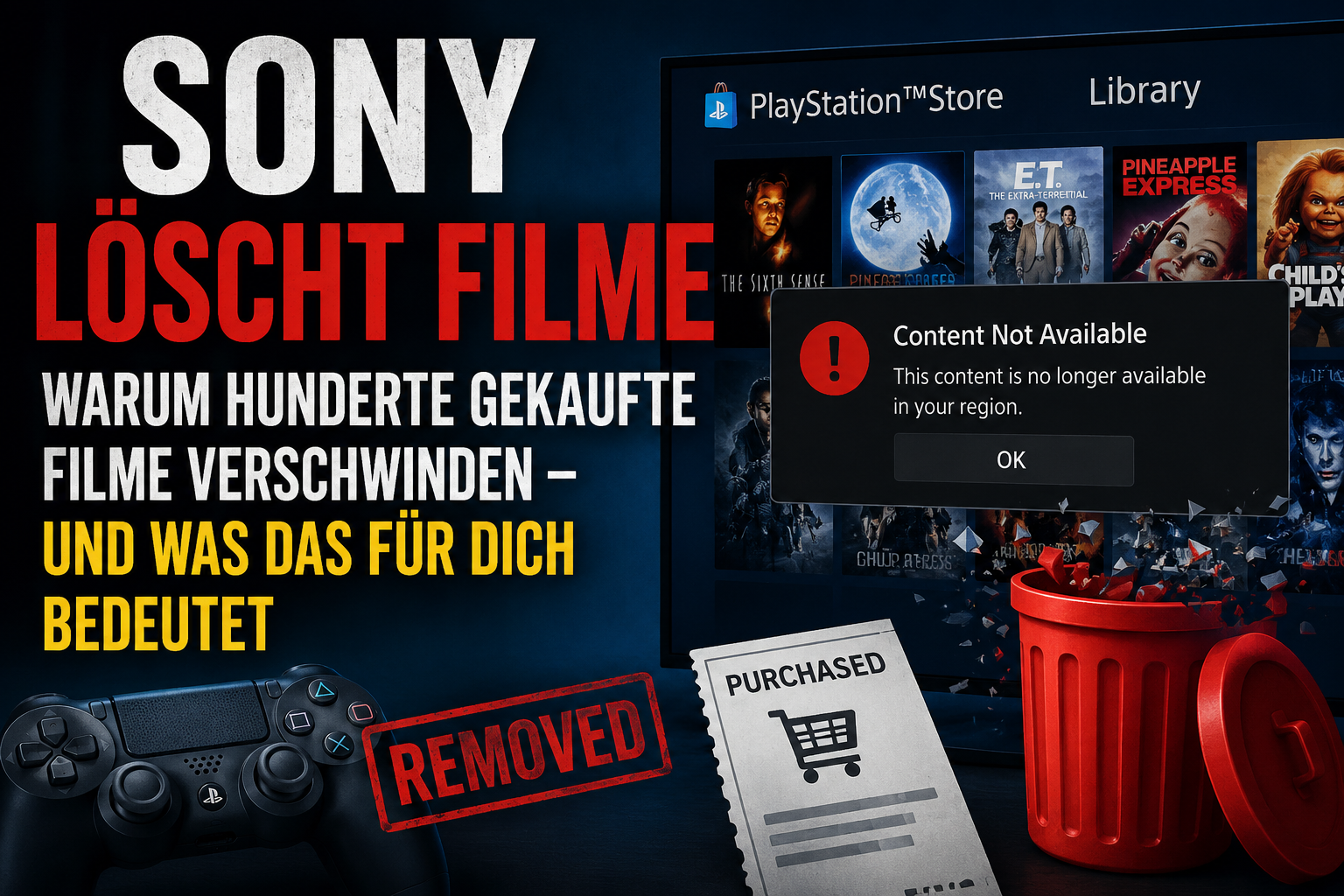

Sony Löscht Filme: Why Sony Is Removing Purchased Digital Movies and What It Means for Digital Ownership
Sony Löscht Filme: Understanding the Digital Movie Removal Controversy
Sony Löscht Filme. For many people, buying a digital movie feels no different from purchasing a Blu-ray disc or DVD. After all, you pay the full price, add the title to your library, and expect to watch it whenever you want. However, recent reports involving Sony have challenged that assumption and sparked a wider debate about what consumers truly own in the digital age.
The phrase “sony löscht filme” has gained attention because it refers to Sony removing access to hundreds of previously purchased digital movies from certain customers. Consequently, many people have started asking an important question: Can a company really remove content that someone already paid for?
Although digital entertainment has made movies easier to access than ever before, it has also introduced new limitations that many customers never notice. In fact, most digital purchases depend on licensing agreements rather than permanent ownership. Therefore, when those agreements change, the content available to users can also change.
Moreover, this situation is not just about Sony. Instead, it highlights a much larger issue affecting streaming services, digital marketplaces, gaming platforms, ebooks, and music libraries across the industry.
In this guide, we’ll explain what happened, why these movie removals matter, how digital licensing works, and what consumers can do to better protect their digital purchases. Furthermore, we’ll explore why this controversy may influence the future of online entertainment.
What Does “Sony Löscht Filme” Mean?
The German phrase “Sony löscht Filme” translates to “Sony deletes movies”. Nevertheless, the situation is slightly more complicated than the translation suggests.
Rather than deleting every purchased movie worldwide, Sony announced that customers in certain regions could lose access to hundreds of digital titles because licensing agreements with a content provider were ending. As a result, many people who believed they permanently owned those movies discovered that access could disappear despite having completed a purchase.
Naturally, this news caused frustration across social media, online communities, and technology forums. Furthermore, consumer advocates questioned whether digital purchases should offer stronger ownership rights.
Although the announcement affected a specific catalogue of films, the discussion quickly expanded into a broader conversation about digital ownership itself.
Why Did This Story Become So Popular?
Several factors contributed to the rapid spread of the story.
For example:
- Customers believed they had purchased permanent access.
- Digital ownership has always been misunderstood.
- Streaming platforms continue changing their libraries.
- More consumers now rely entirely on digital purchases.
- Social media amplified concerns almost immediately.
Consequently, the phrase ‘Sony löscht Filme’ became associated with consumer rights rather than simply one licensing dispute.
What Actually Happened?
To understand the controversy, it’s important to separate emotion from the actual sequence of events.
Sony’s digital entertainment platform offered customers the ability to purchase movies digitally. However, those movies were provided through agreements with third-party studios and distributors.
Eventually, one of those licensing agreements came to an end.
As a result, Sony announced that affected movies would no longer remain available for playback through the platform for certain customers.
Although many buyers assumed they owned the movies forever, digital shopfront terms generally describe these purchases as licensed access rather than unlimited ownership.
Therefore, the controversy centred less on technology and more on licensing rights.
Why Licensing Matters
Licensing is the invisible system behind nearly every digital entertainment platform.
Instead of transferring ownership of the movie itself, companies typically provide permission to watch the content under specific conditions.
Those conditions may include:
| Traditional Ownership | Digital Licensing |
|---|---|
| You own the physical disc. | You receive permission to access content. |
| Works without internet. | May depend on platform availability. |
| Cannot usually be revoked. | Can change if licenses expire. |
| Can often be resold. | Usually cannot be transferred. |
| Independent of service providers. | Depends on ongoing agreements. |
Therefore, buying digitally often differs significantly from purchasing physical media.
Why Consumers Feel Misled
From the customer’s perspective, purchasing and licensing often appear identical.
For example, digital stores use words like the following:
- Buy
- Purchase
- Own
- Add to Library
Consequently, many users naturally believe they are receiving permanent ownership.
However, the legal agreements behind those purchases often describe something very different.
Although these terms are publicly available, most customers never read dozens of pages of legal conditions before clicking “Buy”.
As a result, expectations and legal reality frequently conflict.
The Difference Between Access and Ownership
This controversy highlights an important distinction.
Imagine purchasing a physical Blu-ray.
Once you take it home, nobody can remotely remove it from your shelf.
Now imagine purchasing a digital movie.
Instead of receiving the movie itself, you’re receiving access through an online service.
Therefore, your experience depends on:
- Active licensing agreements
- Platform availability
- Account status
- Regional restrictions
- Distribution contracts
If one of those conditions changes, access may also change.
Consequently, consumers are beginning to question whether the word “purchase” accurately describes digital transactions.
Why This Matters Beyond Sony
Although Sony is currently receiving attention, similar situations have occurred across multiple entertainment industries.
For instance:
- Movies have disappeared from streaming services.
- TV shows have been removed from digital stores.
- Music albums have become unavailable.
- Video games have lost downloadable content.
- Ebooks have occasionally been withdrawn.
Therefore, this issue extends far beyond one company.
Instead, it reflects how digital ecosystems operate worldwide.
The Growth of Digital Entertainment
During the past decade, digital entertainment has transformed how people consume media.
Previously, consumers primarily purchased:
- DVDs
- Blu-ray discs
- CDs
- Physical game cartridges
Today, however, many households purchase almost everything digitally.
For example:
- Movies
- TV series
- Video games
- Music
- Audiobooks
- Software
Consequently, convenience has increased dramatically.
Users no longer need physical storage, shipping delays, or shelves filled with discs.
Nevertheless, greater convenience often comes with reduced control over purchased content.
Advantages of Digital Purchases
Digital media certainly offers many benefits.
These include:
Instant Access
Customers can begin watching immediately after purchasing.
No Physical Damage
Unlike DVDs, digital files cannot become scratched or broken.
Cloud Libraries
Movies remain organised in one account.
Device Compatibility
Many platforms support smartphones, tablets, smart TVs, laptops, and gaming consoles.
Automatic Updates
Improved playback features can become available without replacing physical media.
Therefore, digital entertainment continues growing every year.
The Hidden Trade-Off
Despite these advantages, digital purchases involve compromises that many customers overlook.
For example, buyers usually depend on the following:
- Company servers
- Internet connectivity
- Licensing contracts
- Platform policies
- Regional rights
Consequently, customers possess less control compared to physical ownership.
Although these limitations rarely cause problems, licensing disputes occasionally expose them.
That is precisely why the Sony Löscht Filme story attracted global attention.
How Licensing Agreements Expire
Many people assume licensing lasts forever.
However, licensing agreements generally include expiration dates.
For example, a distributor may grant a platform permission to sell certain movies for several years.
Eventually, that contract ends.
Afterward, both companies may
- Renew the agreement.
- Negotiate different terms.
- End the partnership.
- Transfer rights elsewhere.
If negotiations fail, digital availability can change.
Therefore, licensing directly affects customer access.
Why Regional Rights Make Everything More Complicated
Another important factor involves geography.
Movie rights are rarely identical worldwide.
Instead, studios frequently divide distribution rights by country or region.
For example:
- One company may own North American rights.
- Another may control European distribution.
- A different company may manage Asian markets.
Consequently, the same movie might remain available in one country while disappearing in another.
This explains why digital libraries sometimes differ between regions.
Consumer Expectations vs. Industry Reality
Ultimately, the controversy exists because customer expectations have evolved faster than licensing models.
Consumers generally expect:
- Permanent ownership
- Unlimited viewing
- Lifetime access
- Stable libraries
Meanwhile, the entertainment industry continues operating under complex licensing agreements.
As a result, those two perspectives occasionally collide.
Furthermore, every major digital marketplace must balance consumer expectations with contractual obligations.
Therefore, situations like this may continue unless licensing systems evolve or digital ownership laws become clearer.
Key Takeaways So Far
Before exploring the legal, technical, and consumer protection aspects in the next section, here are the most important points to remember:
- ‘Sony löscht Filme’ refers to reports that certain purchased digital movies may no longer remain accessible because licensing agreements ended.
- However, the issue extends beyond one company.
- Digital purchases often provide licensed access instead of permanent ownership.
- Consequently, expired contracts can affect customer libraries.
- Moreover, regional licensing creates additional complexity.
- Although digital entertainment offers tremendous convenience, it also introduces limitations that many buyers never consider.
- Therefore, consumers should understand the difference between owning physical media and licensing digital content.
In the next part, we’ll take a closer look at how digital ownership works behind the scenes, why companies rely on licensing models, what legal protections consumers have, and how similar situations have affected other digital platforms over the years.
Sony Löscht Filme: Why Digital Ownership Isn’t Always Permanent
How Digital Ownership Actually Works
After learning what sparked the Sony Löscht Filme discussion, the next question becomes even more important: How does digital ownership actually work?
At first glance, the answer seems simple. You pay for a movie, receive a confirmation email, and see the title appear in your digital library. Therefore, it feels exactly like purchasing a physical product.
However, the reality is far more complex.
In most cases, customers do not receive ownership of the movie itself. Instead, they receive a licence that allows them to access the content through a specific platform. Although this arrangement has existed for years, many consumers remain unaware of the distinction.
As a result, confusion often arises whenever a licensing agreement changes or expires.
What Is a Digital License?
A digital licence is essentially permission to use content under specific conditions.
Unlike a physical DVD, which becomes your personal property after purchase, a digital movie generally remains part of a company’s online ecosystem.
Consequently, your access depends on several ongoing factors, including:
- Active licensing agreements
- Platform availability
- Account status
- Regional distribution rights
- Compliance with the platform’s terms of service
Therefore, while the viewing experience feels permanent, the legal structure behind it is quite different.
Physical Ownership vs. Licensed Access
The differences become much clearer when viewed side by side.
| Physical Purchase | Digital Purchase |
|---|---|
| You own the item. | You receive licensed access. |
| No internet is required. | Internet access may be needed. |
| The product stays with you. | Access depends on the platform. |
| You can lend or resell it in many cases. | Transfers are usually restricted. |
| Ownership does not expire. | Access can change under certain conditions. |
Although both options involve paying money upfront, they provide different legal rights.
Therefore, understanding this distinction is essential before building a large digital library.
Why Companies Use Licensing Instead of Selling Ownership
Many consumers wonder why digital platforms rely on licensing rather than permanent ownership.
The answer involves several business and legal considerations.
Intellectual Property Protection
First, movie studios want to maintain control over their intellectual property.
Instead of transferring ownership, they grant limited rights to distributors and digital platforms. Consequently, studios can negotiate future agreements more easily.
Global Distribution
Furthermore, movie rights often vary by country.
A distributor may have permission to sell a film in one region but not another. Therefore, licensing allows companies to manage those differences more effectively.
Revenue Opportunities
Licensing also creates ongoing business opportunities.
Rather than making a one-time sale, companies can renegotiate agreements, launch new services, or move content between platforms as market conditions change.
As a result, licensing has become the standard model across the entertainment industry.
Why Customers Often Feel Confused
Although licensing is common within the industry, consumers rarely think about legal agreements while shopping.
Instead, they focus on familiar purchase buttons that say things like:
- Buy Now
- Purchase
- Add to Library
- Own Digitally
Consequently, many people naturally assume they are buying permanent ownership.
However, the detailed terms of service frequently explain that customers receive a license instead.
Even though those agreements are available, very few users read dozens of pages of legal language before completing a purchase.
Therefore, misunderstandings continue to occur.
The Psychology Behind Digital Purchases
Interestingly, digital stores are intentionally designed to resemble traditional shopping experiences.
For example:
- Products have prices.
- Shopping carts work like online retail stores.
- Checkout processes feel familiar.
- Purchase histories resemble receipts for physical goods.
Because of these similarities, customers often develop the same expectations they would have when purchasing a physical movie.
Nevertheless, the legal relationship remains different.
As a result, disappointment becomes understandable whenever access changes unexpectedly.
Why Licensing Agreements End
One of the biggest misconceptions is that licensing agreements last forever.
In reality, most agreements include specific expiration dates.
For example, a studio may authorise a platform to distribute a collection of movies for several years.
Eventually, that agreement expires.
Afterward, several outcomes become possible.
The licence is renewed.
If both companies reach a new agreement, customers usually experience no interruption.
New Terms Are Negotiated
Sometimes the partnership continues under different financial arrangements.
Rights Move to Another Platform
In other situations, another distributor secures the rights instead.
The Agreement Ends Completely
If negotiations fail, access to certain titles may change.
Therefore, licensing agreements directly influence digital availability.
Why Regional Licensing Creates More Challenges
Another important factor involves geography.
Movie distribution rights are often divided across different countries and regions.
For example, one distributor may control North American rights, while another manages European distribution.
Consequently, a movie that remains available in one country might disappear in another.
This explains why digital libraries sometimes differ even when customers use the same platform.
Moreover, international licensing agreements frequently change over time.
Therefore, regional differences remain one of the most complicated aspects of digital entertainment.
Common Misconceptions About Digital Purchases
Many myths continue to circulate online.
Let’s separate fact from fiction.
| Myth | Reality |
|---|---|
| Buying means permanent ownership. | Most purchases provide licensed access. |
| Companies can never remove content. | Licensing changes can affect availability. |
| Every country has identical movie libraries. | Regional rights often differ. |
| Digital ownership works like physical ownership. | Legal rights are not always the same. |
| Downloading guarantees lifetime access. | Downloads may still depend on platform policies. |
Understanding these differences helps consumers make more informed purchasing decisions.
Why This Issue Extends Beyond Movies
Although the current discussion focuses on films, similar licensing models exist across many industries.
Video Games
Many modern games require online authentication, downloadable updates, or publisher servers.
Consequently, access may change if support ends.
Music Streaming
Albums sometimes disappear after licensing agreements expire.
Therefore, playlists can change unexpectedly.
Television Shows
Streaming platforms regularly rotate their content libraries.
As a result, popular series may become unavailable without much notice.
Ebooks
Although less common, digital books have also faced licensing-related restrictions in certain situations.
Software
Subscription software depends entirely on active licensing.
Consequently, access may end once the subscription expires.
Clearly, digital licensing affects far more than movies alone.
Consumer Rights: What Protections Exist?
Consumer protection laws continue evolving alongside digital technology.
However, regulations vary significantly between countries.
Some jurisdictions require companies to provide clearer information regarding digital purchases.
Others focus on refund rights or transparency.
Meanwhile, lawmakers continue debating whether digital purchases should provide stronger ownership protections.
Although progress has been made, legal standards remain inconsistent.
Therefore, consumers should carefully review purchase terms before making large digital investments.
Questions Consumers Are Asking
Following the Sony Löscht Filme reports, many buyers have started asking practical questions.
Can a purchased movie disappear?
Depending on licensing agreements and platform policies, access may change in certain circumstances.
Should companies use the word “buy”?
Many consumer advocates believe digital marketplaces should communicate licensing terms more clearly.
Will digital ownership laws change?
Lawmakers in several regions continue discussing stronger digital consumer protections.
However, meaningful legal changes often take time.
The Advantages of Physical Media
Because of these concerns, some consumers have renewed their interest in physical collections.
Physical media offers several benefits.
- Permanent possession
- No dependence on internet access
- Greater resale opportunities
- Easier long-term preservation
- No reliance on changing licensing agreements
Although physical collections require storage space, they provide greater control over purchased content.
Therefore, many movie enthusiasts continue purchasing Blu-rays despite the convenience of digital platforms.
The Advantages of Digital Libraries
At the same time, digital entertainment still offers tremendous value.
For example:
- Instant purchases
- Cloud-based access
- No damaged discs
- Easy organization
- Cross-device compatibility
- Fast playback
- No physical storage requirements
Consequently, millions of consumers continue choosing digital purchases every year.
Rather than abandoning digital media entirely, many experts recommend understanding its limitations before relying on it exclusively.
Should You Stop Buying Digital Movies?
Not necessarily.
Instead, consumers should make informed decisions based on their personal priorities.
If convenience matters most, digital purchases remain an excellent option.
However, if permanent ownership is your highest priority, physical media may provide greater peace of mind.
Many movie collectors now combine both approaches.
For example, they purchase favourite films on Blu-ray while buying casual entertainment digitally.
As a result, they enjoy convenience without sacrificing long-term ownership of their most valuable titles.
Lessons Every Digital Consumer Can Learn
The Sony Löscht Filme discussion offers several valuable lessons.
- Read platform policies before purchasing.
- Understand the difference between ownership and licensing.
- Keep copies of purchase receipts.
- Diversify entertainment collections.
- Consider physical editions for favourite movies.
- Stay informed about platform announcements.
- Avoid assuming every digital purchase guarantees lifetime access.
These simple habits can help reduce surprises in the future.
Looking Ahead
The entertainment industry continues evolving rapidly.
Streaming services, digital shopfronts, cloud gaming, and subscription platforms are becoming increasingly popular.
Consequently, licensing agreements will likely remain an essential part of digital entertainment.
At the same time, consumers are becoming more aware of how these agreements affect their purchases.
Therefore, companies may face growing pressure to improve transparency and communicate digital ownership terms more clearly.
As awareness increases, both businesses and customers may benefit from clearer expectations regarding digital purchases.
Sony Löscht Filme: What Consumers Can Do Next and the Future of Digital Ownership
Digital entertainment has transformed the way people watch movies, listen to music, and enjoy television. Nevertheless, the Sony Löscht Filme controversy has reminded consumers that convenience and ownership are not always the same thing.
As digital platforms continue to grow, understanding your rights and responsibilities becomes increasingly important. Therefore, before making your next digital purchase, it helps to know how to protect your library and what trends may shape the future of digital media.
How to Protect Your Digital Movie Collection
Although consumers cannot control licensing agreements, they can reduce potential risks through smarter purchasing decisions.
Instead of relying entirely on one platform, consider building a balanced media collection. Consequently, you’ll have greater flexibility if policies or licensing agreements change.
Here are several practical strategies.
1. Read the Terms Before Purchasing
Most people skip the terms and conditions because they are long and filled with legal language.
However, spending a few minutes reviewing the digital purchase policy can prevent misunderstandings later.
Pay attention to information regarding:
- Licensed access
- Regional restrictions
- Refund policies
- Offline viewing
- Account requirements
- Download limitations
Although this may seem tedious, it provides valuable insight into what you’re actually purchasing.
2. Save Your Purchase Receipts
Keeping digital receipts is always a good habit.
For example, save:
- Email confirmations
- Digital invoices
- Order history screenshots
- Payment records
While receipts may not guarantee restored access, they can help resolve account issues more efficiently.
Therefore, organising purchase records is worthwhile.
3. Diversify Your Digital Library
Instead of purchasing every movie from a single marketplace, many experts recommend diversifying your collection.
For example, you might use different services for:
- Movies
- TV shows
- Music
- Games
- Books
Consequently, one licensing change is less likely to affect your entire entertainment library.
4. Buy Physical Copies of Your Favorite Movies
Digital convenience is excellent for casual viewing.
However, collectors often purchase physical editions of their all-time favourite films.
Blu-rays and DVDs offer several advantages.
These include:
- Permanent possession
- Better preservation
- Independence from internet access
- Special bonus content
- Collector’s packaging
Therefore, combining physical and digital purchases can provide the best of both worlds.
5. Stay Informed About Platform Updates
Companies occasionally announce policy changes, service updates, or licensing modifications.
Although these announcements may not affect every customer, reading them helps you avoid unexpected surprises.
Furthermore, technology news websites often summarise major platform changes in easy-to-understand language.
Consequently, staying informed requires very little effort.
Why Digital Ownership Is Becoming a Global Discussion
The Sony Löscht Filme story reflects a much larger shift in consumer expectations.
Years ago, physical ownership dominated nearly every form of entertainment.
People bought:
- VHS tapes
- DVDs
- CDs
- Printed books
- Game cartridges
Today, however, subscriptions and cloud services dominate the market.
As a result, ownership has gradually shifted toward licensed access.
While many consumers appreciate the convenience, others question whether current licensing models provide enough long-term security.
Therefore, discussions about digital ownership are becoming increasingly common around the world.
How Streaming Changed Consumer Expectations
Streaming services fundamentally changed how people consume entertainment.
Instead of purchasing individual movies, many consumers now expect unlimited access through monthly subscriptions.
Consequently, younger audiences often care less about ownership than previous generations.
However, purchased digital content occupies a unique position.
Unlike subscriptions, purchased titles appear to offer permanent access.
Therefore, confusion arises whenever licensing agreements interfere with customer expectations.
Could Digital Ownership Change in the Future?
Many industry observers believe digital ownership will continue evolving.
Although no one can predict exactly how the market will develop, several trends appear likely.
Improved Transparency
Companies may explain licensing terms more clearly during checkout.
As a result, customers would better understand what they are purchasing.
Better Consumer Education
Many buyers simply do not know how digital licensing works.
Therefore, educational resources could become more common.
Clearer explanations would likely reduce misunderstandings.
Expanded Consumer Rights
Some governments continue discussing stronger protections for digital purchases.
Although legal changes usually happen slowly, policymakers recognise that digital commerce has become an essential part of everyday life.
Consequently, future regulations may provide greater clarity.
New Licensing Models
Studios and distributors may eventually develop licensing systems that better balance business needs with consumer expectations.
If that happens, digital purchases could become more predictable for everyone involved.
Lessons Businesses Can Learn
This situation also provides valuable lessons for digital marketplaces.
Consumers increasingly value transparency.
Therefore, companies that clearly explain licensing policies may strengthen customer trust.
Businesses should consider the following:
- Using clearer language
- Explaining licensing during checkout
- Providing advance notice before changes
- Offering helpful customer support
- Communicating updates consistently
Ultimately, trust plays a significant role in long-term customer relationships.
Lessons Consumers Can Learn
Likewise, consumers can become more informed buyers.
Before making digital purchases, ask yourself a few simple questions.
- Is this a favourite movie that I want permanently?
- Would a physical copy be a better investment?
- Does this platform explain its licensing policy clearly?
- Can I download the movie for offline viewing?
- Am I comfortable relying on one digital service?
These questions only take a few moments to answer.
Nevertheless, they can influence smarter purchasing decisions.
Physical Media vs. Digital Purchases
Both formats offer meaningful advantages.
Rather than viewing them as competitors, many consumers now see them as complementary options.
| Feature | Physical Media | Digital Purchase |
|---|---|---|
| Instant Access | No | Yes |
| Permanent Possession | Yes | Usually Licensed |
| Internet Required | No | Sometimes |
| Storage Space | Yes | No |
| Easy Travel | No | Yes |
| Collector Value | High | Low |
| Platform Dependency | None | Yes |
| Convenience | Moderate | Excellent |
Consequently, the right choice depends on your priorities.
Frequently Asked Questions
What does “sony löscht filme” mean?
The phrase translates to “Sony deletes movies”. It refers to reports that certain purchased digital movies could become unavailable because licensing agreements ended.
Did Sony remove every purchased movie?
No.
The reports concerned a specific catalogue of titles and certain affected customers rather than every movie available on the platform.
Why can digital movies disappear?
Digital purchases often depend on licensing agreements between platforms and content owners.
If those agreements change or expire, access to certain titles may also change.
Does buying a digital movie mean permanent ownership?
Not always.
In many cases, customers purchase licensed access instead of unlimited ownership.
Therefore, reading platform terms before purchasing is important.
Are physical movies safer than digital purchases?
Physical media generally provides greater long-term control because ownership does not depend on online licensing agreements.
However, digital purchases remain far more convenient for everyday viewing.
Should I stop buying digital movies?
Not necessarily.
Instead, understand how digital licensing works and choose the format that best matches your needs.
Many collectors successfully combine both physical and digital libraries.
Can this happen on other digital platforms?
Potentially, yes.
Many online entertainment services rely on licensing agreements.
Consequently, similar situations could occur elsewhere depending on contractual arrangements.
Key Takeaways
The Sony löscht Filme controversy is about much more than one company’s decision.
Instead, it highlights how digital ownership works in today’s entertainment industry.
Here are the most important points to remember:
- Digital purchases often provide licensed access rather than permanent ownership.
- Licensing agreements play a major role in content availability.
- Regional distribution rights add additional complexity.
- Physical ownership and digital purchases offer different legal protections.
- Understanding platform policies helps consumers make informed decisions.
- Diversifying entertainment collections can reduce future risks.
- Transparency remains essential for maintaining customer trust.
Final Thoughts
Digital entertainment has made movies more accessible than ever before. Today, millions of people enjoy instant access to their favourite films across smartphones, tablets, smart TVs, laptops, and gaming consoles. Consequently, digital libraries have become a normal part of everyday life.
However, the Sony Löscht Filme discussion demonstrates that convenience should not be confused with ownership. While digital purchases offer incredible flexibility, they also depend on licensing agreements that most consumers never see. Therefore, understanding those agreements is just as important as choosing which movie to buy.
At the same time, this situation should not discourage people from purchasing digital entertainment altogether. Instead, it serves as a reminder to make informed decisions. By reading platform policies, saving purchase records, diversifying digital libraries, and purchasing physical copies of favourite films, consumers can enjoy the benefits of modern technology while reducing potential risks.
Looking ahead, digital entertainment will almost certainly continue expanding. Likewise, conversations about ownership, licensing, and consumer rights will become increasingly important. As technology evolves, companies, lawmakers, and consumers will all play a role in shaping a fairer and more transparent digital marketplace.
Ultimately, knowledge is the best protection. The more consumers understand how digital ownership works, the better prepared they will be to make confident purchasing decisions in an increasingly digital world.